
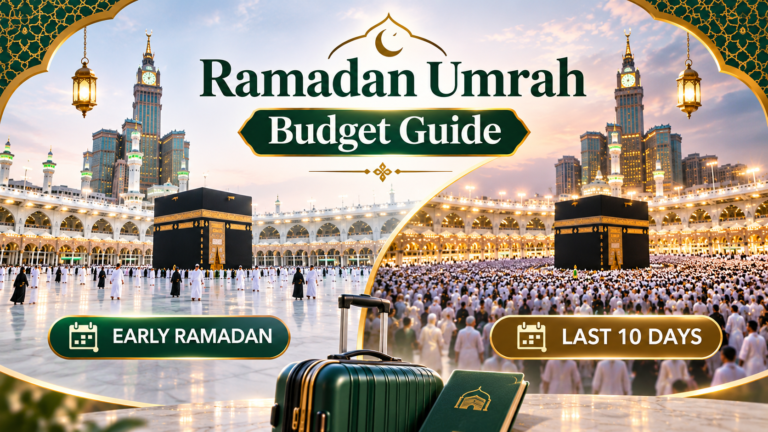
Ramadan is one of the most spiritually rewarding times to perform Umrah. Muslims from around the world travel to Makkah and Madinah during this blessed month to fast, pray, recite the Quran and spend time in worship. However, travelling during Ramadan can also be more expensive than at other times of the year, particularly when it comes to flights, hotel accommodation and transport.
One of the biggest decisions pilgrims face is whether to perform Umrah during the first part of Ramadan or wait until the last ten days. Both options offer a special spiritual experience, but there can be significant differences in travel costs, accommodation availability and crowd levels.
If you are planning your pilgrimage, understanding these differences can help you manage your budget without compromising the quality of your experience.
1. Understanding Ramadan Umrah Costs
The overall cost of Ramadan Umrah depends on several factors. Travel dates, hotel location, accommodation standards and the number of people sharing a room can all influence the final price.
Some of the main expenses to consider include:
- Flights: Airfare can increase as demand rises, particularly closer to the last ten days of Ramadan.
- Accommodation: Hotels near Masjid al-Haram generally cost more than properties located further away.
- Transport: Airport transfers and travel between Makkah and Madinah should be included in your budget.
- Food: Daily meals and refreshments can add to your overall spending.
- Additional expenses: Shopping, personal requirements and local transport should also be considered.
Planning these expenses in advance gives you a clearer idea of how much you need to save.
2. First 10 Days of Ramadan: A More Budget-Friendly Option?
For pilgrims who want to experience Ramadan in Makkah while keeping their expenses manageable, the first ten days can be worth considering.
Demand is generally lower than during the final ten nights, although prices still depend on departure dates, hotel availability and travel arrangements.
Potential benefits of travelling during the first ten days include:
- More accommodation choices, depending on availability.
- Better opportunities to compare hotel prices.
- Potentially lower travel costs than peak Ramadan dates.
- More flexibility when selecting travel arrangements.
- An opportunity to settle into Makkah before the busiest period.
Another advantage is that pilgrims have the opportunity to spend the beginning of Ramadan in the holy city. They can establish a comfortable worship routine, attend prayers at Masjid al-Haram and spend time reading the Quran.
For families and first-time pilgrims, this period may offer a more manageable introduction to the Ramadan Umrah experience.
3. Last 10 Days of Ramadan: Why Are They More Expensive?
The last ten days of Ramadan hold special importance for Muslims. Many pilgrims specifically choose this period because of the opportunity to seek Laylat al-Qadr, which is described in the Quran as better than a thousand months.
As a result, demand for flights and accommodation usually increases significantly.
There are several reasons why travelling during this period can cost more:
Higher hotel demand
Accommodation close to Masjid al-Haram becomes particularly desirable. Hotels within walking distance may have limited availability, and prices can increase during peak dates.
Increased flight demand
Many Muslims plan their pilgrimage around the final ten nights. This can make available seats more expensive, especially when bookings are made close to departure.
Limited accommodation options
Pilgrims who book late may have fewer choices regarding hotel categories, room types and locations.
Greater crowds
The Grand Mosque becomes extremely busy, particularly during the final nights. Pilgrims should prepare for longer waiting times and busy transport routes.
Despite the higher costs, many people consider the last ten days especially meaningful because of the spiritual opportunities associated with this period.
4. Early Ramadan vs Last 10 Days: Cost Comparison
The following table highlights the general differences between the two travel periods.
Factor | First 10 Days | Last 10 Days |
Flight prices | Often more manageable | Generally higher |
Hotel prices | More options at different prices | Premium demand |
Hotel availability | Usually better | Often limited |
Crowd levels | Relatively manageable | Very high |
Booking flexibility | Generally better | More restricted |
Spiritual significance | Beginning of Ramadan | Includes the search for Laylat al-Qadr |
Remember that these are general trends rather than guaranteed prices. Actual costs vary depending on the year, departure location, airline, hotel and booking date.
5. How to Save Money on Ramadan Umrah
Performing Umrah during Ramadan does not necessarily mean spending beyond your financial capacity. With proper planning, you can make informed decisions and avoid unnecessary expenses.
Book Your Travel Early
One of the most practical ways to manage your budget is to start planning several months before Ramadan.
Compare travel dates, hotel options and available arrangements before making a decision. Early planning can give you access to more choices, particularly if you intend to travel during the final ten days.
Choose Accommodation Carefully
Staying directly opposite Masjid al-Haram is convenient, but it can significantly increase your accommodation expenses.
Consider hotels slightly further away if they offer suitable transport arrangements. A comfortable hotel with reliable access to the Haram may be a better choice than paying extra solely for a premium location.
Consider Room Sharing
If you are travelling with family members or friends, sharing accommodation can help reduce the individual cost.
Quad-sharing arrangements are often worth comparing with double or triple occupancy, depending on the hotel’s facilities and room availability.
Compare Different Travel Dates
Flexibility with departure and return dates can make a noticeable difference to your budget.
If your schedule allows, compare prices across different parts of Ramadan rather than selecting dates immediately.
Plan Your Daily Spending
Food, shopping, local transport and personal purchases can gradually increase your expenses.
Set a realistic daily spending limit and keep some money aside for unexpected requirements.
6. Why You Should Compare Ramadan Umrah Tickets in Advance
Flight costs are an important part of any Umrah budget. During Ramadan, demand can increase considerably, especially around the final ten days.
When comparing Ramadan Umrah Tickets, look beyond the advertised airfare. Check baggage allowances, departure times, stopovers, cancellation policies and any additional charges.
If you are travelling with elderly family members or children, convenient travel arrangements may be more valuable than choosing the cheapest available option.
It is also worth checking whether your preferred travel dates align with your accommodation arrangements. Having a suitable flight but no confirmed hotel can create unnecessary difficulties during a busy travel period.
7. Planning Ahead for Umrah 2027
Pilgrims considering the next Ramadan should begin researching their travel arrangements well in advance. An Umrah 2027 Package can be a useful starting point when comparing accommodation standards, travel dates, transport arrangements and available services.
Before choosing a package, consider the following:
- Does the accommodation meet your requirements?
- How far is the hotel from Masjid al-Haram?
- Is transport between Makkah and Madinah included?
- What is the room-sharing arrangement?
- Are visa services included?
- Are there any additional charges?
- What are the booking and cancellation conditions?
Always request a clear breakdown of the total cost before making a payment. Comparing the actual services included in different packages is more useful than choosing an option based on its headline price alone.
8. Which Is Better: Early Ramadan or the Last 10 Days?
The right time depends on your priorities, budget and personal circumstances.
If your main concern is managing expenses, the first ten days may offer more flexibility when comparing flights and accommodation. It can also be a suitable choice for families, elderly pilgrims and those who prefer to avoid the busiest period.
However, if your priority is experiencing the final ten nights of Ramadan in Makkah, travelling during the last ten days may be more meaningful for you. The opportunity to seek Laylat al-Qadr makes this period particularly special, although you should prepare for higher costs and larger crowds.
There is no single answer that suits every pilgrim. The best decision is one that balances your financial situation with your spiritual intentions.
Final Thoughts
Ramadan Umrah is a memorable experience, whether you travel during the first ten days or the final ten nights. Both periods offer opportunities for worship, reflection and spiritual growth.
The most important step is to plan realistically. Compare accommodation, research travel costs, book suitable arrangements early and leave room in your budget for unexpected expenses.
Rather than focusing entirely on finding the cheapest option, choose arrangements that allow you to perform your Umrah comfortably and concentrate on your worship. A well-planned journey can help you make the most of this blessed month without unnecessary financial pressure.