
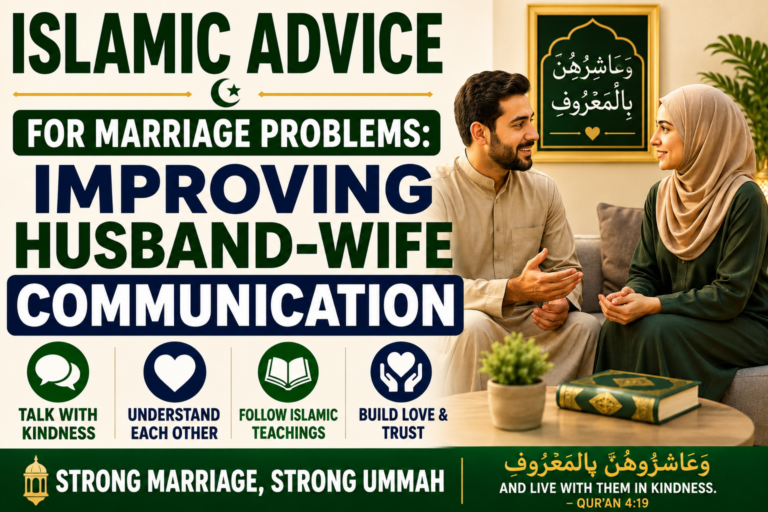
Every marriage goes through rough patches. Even couples who love each other deeply can end up stuck in the same arguments, feeling unheard, or slowly drifting apart. Often, the root problem isn’t a lack of love. It’s a breakdown in communication.
As a Quran teacher, I’ve talked with many students and parents who quietly deal with tension at home while still trying to raise a family with strong Islamic values. The good news is that Islam offers real, practical guidance on this, not just spiritual comfort, but actual principles that can improve how spouses talk to and understand each other.
This article looks at common communication problems between husbands and wives, and how Islamic teachings offer a grounded, realistic path toward improving them.
Why Communication Breaks Down in Marriage
Before looking at solutions, it helps to understand why couples stop communicating well in the first place. Some of the most common patterns include:
- Assuming the other person should “just know” what you need
- Bringing up problems only when already angry or exhausted
- Avoiding hard conversations to keep the peace short-term
- Letting small daily frustrations pile up without addressing them
- Comparing the marriage to others, especially on social media
None of these problems are unusual. They show up in most long-term relationships, Muslim or not. What matters is having a framework to work through them, and this is where Islamic principles offer real structure.
What the Quran Teaches About Marriage and Communication
The Quran describes spouses as a source of comfort and closeness for each other, using the image of garments that cover and protect one another. This isn’t just a poetic description. It sets an expectation: spouses are meant to shield each other’s weaknesses, not expose or criticize them to others.
The Quran also describes marriage as built on love and mercy between spouses, both qualities that require ongoing effort, not something that simply exists automatically once a marriage begins. Love brings closeness. Mercy allows patience and forgiveness during hard days.
Together, these ideas set a foundation: marriage isn’t meant to run on autopilot. It requires the same intention and consistency that Muslims apply to worship, whether that’s daily prayer or steady learning of the Quran.
Practical Islamic Principles for Better Communication
- Speak to Correct, Not to Wound
Islamic teaching consistently emphasizes gentle, kind speech, described in the Quran as speaking “the best word” even in disagreement. This applies directly to marriage. Raising a concern is fine. Raising it with sarcasm, insults, or bringing up old mistakes usually does more damage than the original issue.
Practical tip: Before raising a concern, pause and ask yourself if you’re trying to solve the problem or just release frustration. These require very different tones.
- Listen Before Responding
The Prophet Muhammad (peace be upon him) was known for listening carefully and giving people his full attention when they spoke. Many marriage arguments escalate simply because one spouse is preparing their response while the other is still talking, rather than actually listening.
Practical tip: Try repeating back what your spouse said before replying. “So you’re saying you feel unsupported when I…” This single habit reduces misunderstandings dramatically.
- Address Issues Early, Not After They Build Up
Islamic guidance encourages resolving disputes directly and promptly rather than letting resentment grow silently. Waiting weeks or months to mention something small usually turns it into something much bigger by the time it comes out.
Practical tip: Set a regular, low-pressure time each week to check in with each other, even five or ten minutes. Small, regular conversations prevent big blowups later.
- Avoid Involving Extended Family in Every Disagreement
While seeking advice from trusted, wise family members is encouraged in more serious situations, constantly discussing small marital disagreements with parents or siblings often adds pressure rather than solving anything. Islamic teaching values privacy and dignity within a marriage, especially regarding personal matters between spouses.
Practical tip: Agree as a couple on which issues stay between the two of you, and which genuinely need outside input.
- Make Space for Each Other’s Stress, Not Just Facts
Often, one spouse wants to be understood emotionally, while the other jumps straight to solving the problem logically. Islamic tradition places huge value on empathy and softness, qualities that matter as much as practical solutions.
Practical tip: Ask, “Do you want me to help fix this, or do you just want me to listen right now?” This simple question avoids a lot of unnecessary frustration.
When Communication Problems Run Deeper
Some communication issues go beyond daily friction and point to more serious strain in a marriage, ongoing resentment, trust issues, or repeated conflict that never resolves. In these situations, Islamic tradition strongly encourages bringing in a mediator from each side of the family, or seeking guidance from a knowledgeable, trusted scholar or counselor, rather than letting the couple struggle alone indefinitely.
If a marriage is dealing with serious or ongoing conflict, professional marriage counseling alongside Islamic guidance is often the most effective path, not a replacement for faith-based advice, but a support alongside it.
Building Shared Habits That Strengthen Communication
Strong communication isn’t only about handling conflict well. It also grows through shared positive habits.
Praying together when possible
Even praying in the same space, without formally leading each other, builds a shared spiritual rhythm.
Learning together
Some couples take on learning goals together, like working through online Quran classes as a pair, which naturally opens conversations about patience, humility, and personal growth.
Reading Quran with reflection, not just recitation
Discussing a verse’s meaning together, perhaps through an online Quran Tarjuma course, can spark honest, low-pressure conversations that carry into daily life.
Regular appreciation, not just correction
Actively mentioning something you appreciate about your spouse, out loud, regularly, balances the natural tendency to focus only on complaints.
Final Thoughts
Marriage takes ongoing effort, and communication sits at the center of nearly every challenge couples face. Islamic teachings don’t just offer comfort during hard times. They offer clear, practical direction: speak gently, listen fully, resolve issues early, and protect your spouse’s dignity, even during disagreements.
If you and your spouse are looking for a shared way to grow together spiritually, learning Quran online together with a patient, experienced Quran teacher can be a meaningful place to start. A steady, shared habit like this often strengthens communication far beyond the lesson itself. Book a free trial class together and see where it takes your relationship.