Quran Teacher Seychelles
We teach the Quran one to one over live video to students across Seychelles. Classes run thirty minutes, five days a week, with the same teacher every session. Your first three classes are free. After that, twenty classes cost $30 a month. Every tutor is a Hafiz or Hafiza, teaching in English and Urdu, and both male and female teachers are available.
Class times that suit Seychelles
Seychelles is one hour behind Pakistan, where our teachers live. That is the smallest time gap of any country we teach in, and it means no one has to sit up at night on either side.
A 4:30pm class in Victoria, straight after school, is 5:30pm for your teacher. A 7pm class is 8pm. An early morning slot before work runs the same way. Weekend times are open through the day, and you keep the same slot each week.
Muslim families in Seychelles
The community here is small but growing faster than almost anywhere. The census counted 506 Muslims in 1994, 866 in 2002 and 1,459 in 2010. By 2022 the figure was around 3,000, close to 2.4% of the country. It roughly doubled in twelve years.
The Islamic Society of Seychelles formed in the mid 1970s, when there were about a hundred Muslims in the islands. The five daily prayers and Jumu’ah began at a founding member’s private house around 1978. Two founding families donated land in the heart of Victoria, and Sheikh Suroor bin Mohamed Al-Nahayan of Abu Dhabi, who was holidaying here at the time, paid for the building. Work started in 1981 and finished in September 1982. That mosque still stands at Bel Air with its gold dome and room for 600 people. A second mosque opened in Mont Fleuri in 2013, and the society’s centre is on Rue de la Possession.
Both are on Mahé. There is no mosque on Praslin and none on La Digue. A family in Baie Sainte Anne, Grand’Anse or La Passe has no Islamic class within reach, and no ferry ride makes that practical twice a week.
For families in Victoria there is some teaching at the mosques. What is harder to find anywhere in the islands is a fixed one to one slot with the same teacher, at a time that fits school.
Two kinds of families, taught the same way
The families who founded the community here came from Gujarati Indian backgrounds, which is why Urdu is still spoken in some Seychellois homes. Alongside them are Seychellois who came to Islam themselves, many from Catholic families.
Both start with us at the same place: whatever letter the student already knows. Nobody is put in a group and nobody repeats what they have already learned.
What we teach
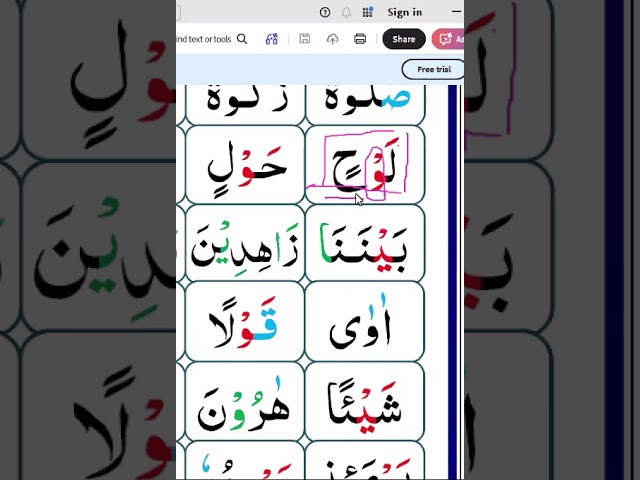
Noorani Qaida
The Arabic letters and their sounds. Where every beginner starts.
Quran reading
Reading from the Mushaf with tajweed, at a pace the student can hold.
Hifz
Memorisation with a daily portion and a fixed revision cycle, starting with the short surahs.
Tarjuma
Word by word meaning in English or Urdu.
Tafseer
Explanation and background, surah by surah.
Urdu
For families keeping the language at home.
All six sit on our courses page.
Starting from the first letter
Most beginners, child or adult, cannot read a single Arabic letter on day one. That is the normal starting point.
If you accepted Islam as an adult, or grew up without anyone at home to teach you, you are not behind. You begin at the letters in a private class where nobody else is listening. Most adults reach the short surahs within a few months.
Our teachers and how they recite
Our tutors come from Egypt, Jordan and Saudi Arabia. Some are native Arabic speakers and some are not. All are Hafiz or Hafiza, and all teach Hafs an Asim.
That matters here. Hafs an Asim is the reading used in the Victoria mosques, so a student recites the same way as the imam at Jumu’ah. Read more about our academy and see what families say in our student feedback.
Female Quran teachers in Seychelles
Female tutors teach girls and women, and you choose the teacher’s gender when you book. For sisters learning on their own, the class is private and nobody else joins the call.
Fees
Twenty classes a month cost $30, or £30 or €30. Fees are set in those currencies rather than rupees, so message us and we will confirm the exact amount before you pay anything. There is no joining fee and no charge for materials. Payment is by Western Union, and details sit on our monthly fee page.
Your three trial classes are free. You owe nothing if you decide not to continue.
If you miss a class
Tell your teacher or message our office before the lesson and we move it. School terms shift, families travel between islands, children fall ill. A class we know about in advance is rescheduled, not lost.
Where we teach in Seychelles
We take students anywhere with a working internet connection. On Mahé that covers Victoria and the Greater Victoria districts of English River, Mont Fleuri, Saint Louis, Bel Air, Mont Buxton and Roche Caiman, along with Beau Vallon, Glacis, Anse Étoile, Bel Ombre, Anse Royale, Anse aux Pins, Anse Boileau, Baie Lazare and Takamaka. On Praslin we teach in Baie Sainte Anne and Grand’Anse, and we teach families on La Digue.
Lessons are taught in English and Urdu. Kreol Seselwa and French are official languages here too, but a student needs to follow English or Urdu in class.
You need a phone, tablet or laptop. Classes run on Zoom, Google Meet or Microsoft Teams. We also teach families in the UAE and Saudi Arabia, which sit in nearby time zones, and our full online Quran academy covers children and adults.
Book your free classes
Message us on WhatsApp or use our contact page. A teacher replies, asks the student’s age and level, and offers a time that fits your week. You will not be handed to a salesperson.
Contact us on WhatsApp for trial classes in Seychelles
F.A.Q. GUIDE RELATED TO OUR ONLINE COURSES & CLASSES
Yes We have both.
1 to 1 Classes duration is 30 minutes for each student. At some cases it can be increased up to 40 minutes.
There is teaching at the Victoria mosques. Families outside the capital, and anyone wanting a fixed one to one slot, use online classes.
Depending on the intensity of the studies (how many classes you take), it will take for adults 6/8 months. For children, it depends on their competency level and the support given by parents.
Neither island has a mosque, so online lessons are the practical option there.
Yes. Many of our adult students begin at the first Arabic letter.
A laptop, PC, Tablet or Smart Phone, Internet Connection. We use Google Meet, Teams and Zoom for audio/video chat call.
From about four, once a child can sit for thirty minutes and repeat sounds clearly.
If You Have Any Questions, Trial Classes & Registration



FEEL FREE TO ASK
Where We Provide Online Quran Classes
Scattered across turquoise waters and island shores, Seychelles’ Muslim families are staying close to the Quran through flexible one-to-one online classes, wherever home may be.