
Quran Teacher Nicaragua
We give live private Quran lessons by video to students across Nicaragua. Families in Managua, Granada, Masaya, Leon and Chinandega study Quran reading, tajweed, memorization and meaning five days a week. Every student is paired with one Hafiz or Hafiza who teaches only them. The first lesson is free.
Quran learning in Nicaragua today
Nicaragua has a small Muslim community. United States Department of State reporting has estimated it at roughly 1,200 to 1,500 people, mostly Sunni families of Palestinian, Jordanian, Libyan and Pakistani background, plus Nicaraguans who accepted Islam later in life.
Nearly all organised religious life sits in the capital. The Islamic Cultural Center and the Mezquita de Managua, on Pista Suburbana in Villa Santa Fe, are the main place of prayer, with around 320 men attending regularly. Families in Granada, Masaya and Leon pray in private homes and travel to Managua for Jumu’ah.
That is the problem this page answers. There is no madrasa in Granada and no weekly halaqa in Chinandega. A child in Leon who needs daily correction on their makharij will not get it from a monthly trip to the capital. Private video lessons solve a distance problem, not a convenience problem.
Many adults here begin at the first letter
A large share of Nicaragua’s Muslims accepted Islam as adults. Others grew up Muslim in a country with no madrasa and never learned the script.
Tell us if this describes you. Parents and children often study one after the other in the same hour, and an adult starting at the alphabet is normal here. New Muslims usually begin with what salah requires: al Fatiha, a few short surahs, and correct pronunciation. Reading the full Mushaf comes after that.
Class times
Nicaragua runs on UTC minus 6 with no seasonal clock change. Our teachers are in Lahore, 11 hours ahead of Managua. We would rather be straight with you about what that means.
Two windows work. Early morning in Nicaragua, roughly 5:00 to 8:00 a.m., falls in the afternoon for your teacher and suits children before school. Evening, roughly 7:00 to 9:00 p.m., falls early in the Pakistani morning and suits working adults.
Midday in Nicaragua is the middle of the night on our side, so we do not offer it. Other academies promise any hour you like. Ask them what time that is where the teacher lives.
Courses
Noorani Qaida
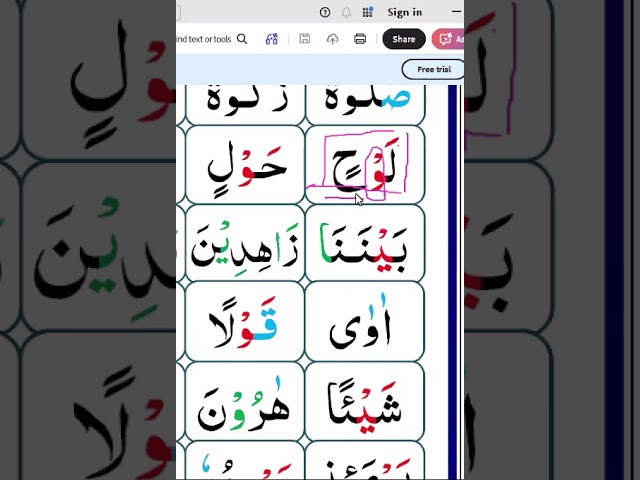
Arabic letters, their sounds and how they join. Where a child or an adult starts when the script is new.
Nazra Quran reading
Reading straight from the Mushaf with correct pronunciation once the letters are secure.
Recitation with tajweed
Taught in the riwaya of Hafs an Asim, the recitation used at the Managua mosque and across the Sunni world. Students work on makharij, on qalqalah, and on letter pairs that blur easily, such as ض and ظ.
Hifz
Memorization built on short daily portions and a fixed revision cycle, starting with Juz 30 and the short surahs.
Tarjuma and tafseer
Meaning of the ayat, verse by verse, for students who already read fluently.
Arabic and Islamic studies
Grammar, vocabulary and the basics of salah, wudu and akhlaq. Urdu is available for Pakistani families here.
Female teachers for sisters and girls
Hafiza teachers are available and you can ask for one when you book. The lesson is private. Nobody else is in the room, the camera can stay off, and timing can fit around the household.
Male teachers
Male teachers are available on the same terms. Tell us which you prefer at booking and we match you before the trial, not after.
What one to one changes
In a group a weak letter goes unheard. In a private lesson the teacher hears every sound the student makes and corrects it at once. Pace follows the student, so a child who needs three weeks on one page gets three weeks, and a quick learner is not held back.
Our teachers
Every teacher has memorized the Quran in full and teaches in the riwaya of Hafs an Asim. We employ qualified male and female instructors with years of online teaching behind them.
You meet your teacher in the free trial before paying anything. If the match is wrong, ask for a different one at no cost. Families elsewhere have written about their experience on our students feedback page, and our about page explains how the academy is run.
Language
Teaching is in English. Recitation itself needs no translation, since pronunciation is taught by listening and repeating. Notes and messages can be kept simple so a Spanish speaking parent can follow the schedule.
Monthly fee
Classes are 30 US dollars a month for 20 lessons of 30 minutes, Monday to Friday. That is about 1.50 dollars per private lesson. Families enrolling more than one child pay less per child. Full details are on our monthly fee page.
Ask about payment before you enrol and we will confirm which method works from your bank. This is the step that catches people out most often.
How to start
Write to us on WhatsApp or by email. Tell us the student’s age, whether they read Arabic already, and which hour suits you. We reply within a day and set up a free trial. You pay only if you continue.
Many Nicaraguan families have relatives abroad. We also teach in the United States and Canada, so cousins in Miami and Managua can study with one academy.
Contact us on WhatsApp for trial classes in Nicaragua
F.A.Q. GUIDE RELATED TO OUR ONLINE COURSES & CLASSES
Via video call (Zoom/Teams) on any phone, tablet, or computer.
1 to 1 Classes duration is 30 minutes for each student. At some cases it can be increased up to 40 minutes.
Yes, through live online classes with qualified tutors.
Depending on the intensity of the studies (how many classes you take), it will take for adults 6/8 months. For children, it depends on their competency level and the support given by parents.
Scheduled around Central Standard Time to fit any routine.
Yes, available on request for girls and women.
A laptop, PC, Tablet or Smart Phone, Internet Connection. We use Google Meet, Teams and Zoom for audio/video chat call.
Yes, before any paid enrollment.
If You Have Any Questions, Trial Classes & Registration



FEEL FREE TO ASK
Where We Provide Online Quran Classes
A land of lakes and volcanoes, Nicaragua’s Muslim families are now adding something deeper to daily life, consistent Quran learning through flexible one-to-one online classes.