
Quran Teacher Portugal
At Quranpakteacher we have taught Quran online since 2020. Families in Portugal study with us for €30 a month, which covers 20 live classes. Each class runs 30 minutes, Monday to Friday, with one assigned teacher. Every tutor has memorised the full Quran. Your first class is free, and you pay nothing until you have met your teacher.
What €30 a Month Covers
Twenty private lessons per month, five days a week, 30 minutes each. One student, one teacher, no group sessions. Classes run on Zoom, or Google Meet, so you need only a laptop or tablet and a steady connection. Parents may sit in on any lesson. We do not rotate tutors, because children learn faster when the same teacher follows their progress week after week.
Most academies ask you to fill in a form before they will discuss fees. We publish ours. See the full fee plan.
Is the First Class Really Free?
Yes. You book a trial, meet the tutor, and watch how the lesson runs. Nothing is charged. If the teaching style suits your child, we set a regular timetable. If it does not, there is no follow up.
Who Teaches Your Child
Every teacher at our academy is a Hafiz or Hafiza, meaning they have memorised the complete Quran. Our tutors teach in English and Urdu, and cover Quranic Arabic within lessons. We do not currently teach in Portuguese, so this suits families where a parent or child is comfortable in English or Urdu.
Sisters and girls may request a Hafiza. Just say so when you message, and we will assign a female tutor.
Fitting Lessons Around the Portuguese School Day
Children in escola básica usually finish around 17:00, and many stay later for atividades de enriquecimento curricular. Our teachers are in Lahore, which sits four to five hours ahead of Lisbon depending on the season. That gap works in your favour. A 19:00 lesson in Amadora is late evening for the tutor, and those slots are available. Early morning before school also works well for older students.
Weekend Hifz timetables are available for children who cannot commit on weekdays.
Why Families Across Portugal Study Online
Portugal’s Muslim community is small. The 2021 census recorded Muslims at roughly 0.4 percent of the population, with community estimates putting the figure near 65,000 people, concentrated in the Lisbon and Porto metropolitan areas and the Algarve Islam in Portugal, Wikipedia.
The institutions exist, but they are few and clustered. The Central Mosque on Avenida José Malhoa near Praça de Espanha opened in 1985 and holds around a thousand worshippers Central Mosque of Lisbon. The Comunidade Islâmica de Lisboa, formed in 1968, runs classes and cultural programmes there comunidadeislamica.pt. Beyond Lisbon there is the Aicha Siddika mosque in Odivelas, Masjid Al-Madina in Laranjeiro, Masjid Sayyiduna Ussman in Amadora, the Coimbra mosque on Rua Bernardo Santareno, and the Colégio Islâmico at Cabanas in Palmela.
If you live in Braga, Faro, Aveiro, Viseu, or a smaller town in the Algarve, the nearest madraça may be an hour or more away. Academic research on Portugal’s Muslim population notes that most Islamic education happens in madrasas or through private tutors, because public school provision is limited Tiesler, Muslim Populations in Portugal. Online lessons remove the drive.
Courses We Teach
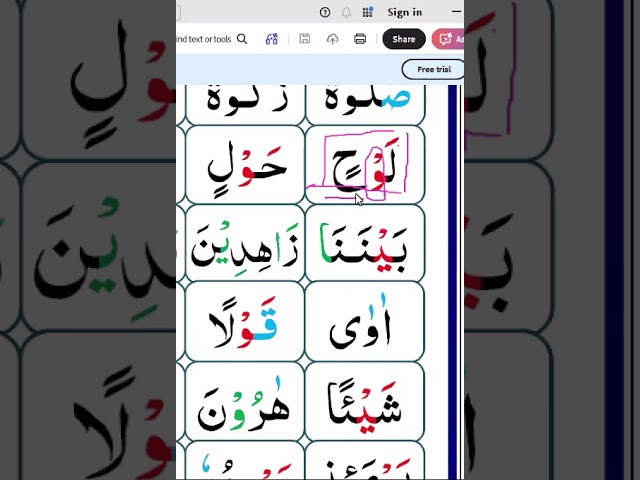
Noorani Qaida for absolute beginners. This is the starting point for anyone with no prior exposure to Arabic script. Students learn the individual letters, their correct sounds (makharij), and how letters change shape and join together to form words. This is where adults with no Arabic background start, and where most children under eight begin. Lessons move at a steady, unrushed pace, since a shaky foundation here causes problems in every course that follows.
Quran reading with Tajweed. Once a student can decode letters and simple words, they move on to reading the Quran itself with correct pronunciation. This includes the rules of Tajweed, proper articulation points, the rules of stopping and starting (waqf), elongation, and the characteristics of letters. The goal is not just accurate reading but fluent, confident recitation that a student can carry for life.
Hifz (memorisation). This is structured, long-term memorisation of the Quran with a daily revision system built in from day one, since memorisation without revision does not last. Students memorise new portions on a set schedule and continuously revise what they’ve already learned, both recent and old. Most students who keep a steady, consistent schedule complete the full memorisation in three to five years. Anyone promising a significantly faster timeline is not accounting properly for revision, and shortcuts here tend to fall apart later.
Tarjuma and Tafseer. This course moves beyond reading into understanding. Students first learn word-by-word translation of the Quran, building vocabulary and grammatical familiarity, and then move into Tafseer the meaning, context, and explanation of verses, including the circumstances of revelation and how scholars have understood them.
Urdu. Offered for families who want their children to maintain the language, particularly those raising children outside Urdu-speaking environments. Covers reading, writing, and conversational fluency, with lessons structured for children who may be encountering Urdu mainly at home.
It’s Never Too Late to Start
Many of our students are adults who never finished learning to read Arabic, or reverts beginning from nothing. Nobody watches. There is no class of children to sit alongside. Your teacher starts at whatever page you are actually on, and nobody is told how long it takes you.
This is the most common reason adults choose private lessons over a mosque study circle, and there is no reason to be self conscious about it.
Is It Safe for My Child to Study Online?
You can join any session. Many parents keep the tablet in a shared room and stay within earshot for the first few weeks. Your child has one assigned teacher rather than a rotating pool, so you know exactly who is teaching. We send progress updates, and you can ask to change tutors at any point without explanation.
Contact us on WhatsApp for trial classes click here
F.A.Q. GUIDE RELATED TO OUR ONLINE COURSES & CLASSES
Yes, you can choose at your own convenience. We do our best to find the teachers who is available at that time.
Every student gets focused, one-on-one attention for 30 minutes per class, with the option to extend up to 40 minutes.
For adults, the journey usually takes 6 to 8 months, depending on the intensity of study. For children, progress is more personal it depends on their learning pace and the encouragement they receive from parents.
Yes, we offer qualified female tutors from Portugal, dedicated to teaching women and children.
Tell us in advance and we reschedule within the same month where the timetable allows.
A child starting at Qaida level typically reads short surahs correctly within eight to twelve months of steady daily practice.
Anywhere in Portugal. Our students include families in Lisbon, Porto, Amadora, Odivelas, Almada, Braga, Coimbra, Setúbal, Faro, and Aveiro.
Monthly, by Western Union.
If You Have Any Questions, Trial Classes & Registration



FEEL FREE TO ASK
Where We Provide Online Quran Classes in Portugal
Students in Portugal can join our online Quran lessons from home, with flexible schedules and personalised one-to-one teaching method.