Quran Teacher Iran

Thirty dollars a month, twenty lessons of thirty minutes, one to one, taught in Hafs an Asim by Hanafi teachers working in English and Urdu. Three lessons free before anything is paid. Whether a Quran teacher in Iran is any use to your family depends almost entirely on where you are sitting, and Quran Pak Teacher would rather sort that out now than after you have paid.
Everything below reflects conditions as of September 2026.
Iran Does Not Lack Quran Teachers
This comes first because every other page on the subject pretends otherwise.
Iran runs one of the most developed Quran education systems in the world. It hosts the International Holy Quran Competition, now past its fortieth edition, and runs international teacher training courses in Mashhad that draw participants from other countries. Iranian qaris are studied and imitated far beyond Iran. Dar al-Quran institutions, mosque programmes and school classes reach into most cities.
If you live in Tehran, Mashhad, Isfahan, Shiraz or Qom, have working internet, and want your child taught Quran, there is almost certainly something better within walking distance than anything delivered over a video call. Use it.
That narrows who this page is for considerably.
Who This Page Is Written For
Iranian families living outside Iran. This is the largest group and the one where everything works normally. Persian speaking households in Los Angeles, Toronto, Vancouver, Frankfurt, Hamburg, London, Istanbul, Dubai and Stockholm, where the local mosque teaches in Arabic or Turkish and the children are quietly losing the thread. You pay the way anyone else does, your internet is your own, and none of the constraints below touch you. Skip to the courses.
Sunni families inside Iran: Around nine percent of the country is Sunni, and the institutions above are built around Shia teaching. Baloch households in Sistan and Baluchestan, Turkmen households in Golestan and North Khorasan, Kurdish households in Kurdistan and West Azerbaijan. The fit here is real and the section below is written for you.
Families inside Iran with relatives abroad: If someone outside the country can pay on your behalf, the payment barrier disappears and a household can learn Quran online Iran side with a private Quran tutor much as a family in Toronto would. Connectivity remains its own question.
What an Online Quran Teacher in Iran Can Actually Offer
One tutor, the same person every time, half an hour, with nobody else in the lesson.
That is the entire offer. It beats a weekly group class on repetition and correction. It does not beat a good local teacher who shares your madhhab and sits in the same room, and we will not pretend it does.
Hanafi Teaching, and Where It Fits
Our teachers follow the Hanafi madhhab and trained in Lahore. What that is worth depends on who you are.
Baloch families around Zahedan, Iranshahr and Chabahar are Hanafi. So are Turkmen families near Gonbad-e Kavus and Bandar Torkaman. For these households the fiqh a tutor explains is the fiqh already practised at home, and that alignment is hard to find from any academy staffed out of Egypt or the Gulf.
Kurdish Sunni families in Sanandaj, Mahabad and Saqqez mostly follow the Shafi’i madhhab rather than Hanafi. The two agree on nearly everything a child meets in the first years, and on recitation they are identical, but the difference is real and better named now than discovered later.
For Shia families the recitation is common ground, as the section on qira’at explains. The divergence sits in Tafseer, fiqh and Islamic studies, and it is wide. If those three are what you want taught, an Iranian teacher will serve your child better than we will.
Female Tutors for Women and Girls
For a good number of households this is not a preference but the thing that decides whether lessons happen at all, so it gets its own section rather than a line buried in the questions below.
Women teach women and girls. A female Quran teacher Iran families request is matched before the first free lesson, not after enrolment, and you should raise it in your first message so the trial itself is with the right tutor rather than someone who has to be swapped out later.
It matters most in three situations. A girl reaching an age where her parents would rather she not be taught by a man. An adult woman who never learned to read Arabic and does not want to begin in front of a male teacher or a room of children. And a mother learning alongside her daughter, which happens more often than people expect once the lessons are private.
Two practical points. The tutor is the same woman every lesson rather than whoever is free that day, because progress depends on somebody knowing where the student left off. And a parent or husband may sit in on any lesson without arranging it beforehand, which for some families is the condition that makes the whole thing acceptable.
If a female tutor is not available in the exact hour you want, we will say so and offer the nearest hour rather than quietly putting a man in the slot.
Where the Courses Begin
Six courses. The tutor fixes the entry point during the free lessons. The full list is on our courses page.
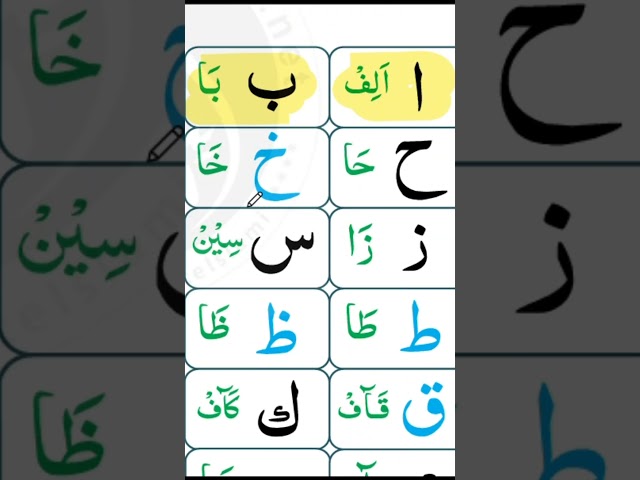
Noorani Qaida is the first book for anyone who cannot yet read Arabic script. Letters alone, then joined, then the marks that fix each vowel. Persian is written in a modified Arabic script, so Iranian children abroad usually recognise the letterforms on day one and move faster than the tutor plans for. Adults start here too and there is nothing embarrassing about it.
Quran reading is reading from the mushaf with Tajweed applied as it arises rather than taught as separate theory. The tutor hears a mistake and corrects it inside the same minute. That is the one thing a live lesson does that no recording or app can.
Hifz begins at Juz Amma, because those surahs carry the daily prayers. A session splits into new lines, the previous day’s lines, and a rolling check over older material. Drop the third part and the rest leaks away within weeks.
Tarjuma is word by word meaning, for students already reading cleanly. Persian carries a large borrowed Arabic vocabulary, so Iranian students often discover they recognise a sizeable share of the words before anyone teaches them.
Tafseer, and Islamic studies online Iran families ask about, are taught from the Sunni tradition. Written here plainly so it is never a surprise.
Urdu is there for households that want it kept.
Online Quran classes for kids stay short and repetitive by design. Adult classes drop the repetition and move at the student’s pace.
Which Days Lessons Fall On
Worth setting out, because the Iranian week and ours do not line up the way people assume.
Iran’s school and working week runs from Saturday through Wednesday, with Thursday often short or free and Friday the weekend. Our teachers work Monday to Friday, and across those five days the shifts run right around the clock.
That matters more than the day count. Because every hour of those five days is staffed, you are not choosing from two or three evening slots. Six in the morning before school, two in the afternoon, ten at night after a late shift, all of them sit inside a working rota. Pick the hour that suits the household and it can be covered.
The overlap with the Iranian week is also better than it first looks. Monday, Tuesday and Wednesday are ordinary school days, so those lessons usually land early morning or evening. Thursday and Friday, the two days an Iranian child is most likely free, are both days our teachers work, and a Friday morning slot is often the easiest hour of the week to fill.
What you do not get is Saturday or Sunday, which are working days in Iran and the days our teachers are off. Five lessons a week still fit without strain.
Lesson Times Across Iran Standard Time
Iran runs three and a half hours ahead of UTC and stopped changing clocks for summer some years ago. Lahore sits at five. That puts the teachers ninety minutes ahead of Tehran, the narrowest gap of any country we teach.
Iranian families abroad are scheduled on their own local time. A household in Toronto, Hamburg or Dubai picks its hour the same way, since the twenty four hour rota covers every time zone across those five days.
Paying From Outside Iran
This is the section other pages leave out entirely.
Iranian banks are disconnected from SWIFT. Western Union, MoneyGram and PayPal hold no agent network inside Iran and can neither send nor receive there. Cards issued by Iranian banks do not work across borders. There is no direct route for a family inside Iran to send a monthly fee out.
Payment from outside does work. A relative in Germany, Canada, Turkey or the Emirates can cover a child in Iran, and a good number of families arrange precisely that. If you are the Iranian family already living abroad, you pay exactly as anyone else does.
If nobody outside Iran can pay, we would be starting lessons that cannot continue past the free ones. Tell us at the beginning and we will say honestly whether to start at all.
What Happens When the Internet Goes Down
Plainly, because the record here is severe.
Iran’s national internet blackout began on 8 January 2026 and was not lifted until 26 May 2026, a span of roughly four and a half months. The first three weeks were a full nationwide shutdown. Access was then relaxed into a heavily filtered whitelist arrangement, before a second near total shutdown from late February took national connectivity down to about four percent of normal, and near one percent by early March. Restoration in late May was partial, slow and still filtered.
No service can teach through that, and we will not claim we can. What we can commit to is narrow and concrete. Lessons missed to a shutdown are not charged. Your slot and your named tutor are held rather than reassigned to someone else. When access returns you resume at the point the lessons stopped, not at the beginning.
Families outside Iran are unaffected by any of this.
The Teachers and the Qira’at
Tutors are Hafiz and Hafiza. Hafiz Ali Ahmad and Hafiz Umair Akram each carry ten years of teaching. There are no stock photographs on this site and no profiles anyone invented. Ask who your tutor will be before you commit and you will be given a name.
On recitation there is far more agreement than most families expect. Hafs an Asim is the standard reading across Iran, and it is the reading our teachers teach. A child learning tajweed in these lessons is learning the same qira’at heard on Iranian radio and at Iranian competitions. Whatever else separates the traditions, this does not.
More about the academy sits on our about page.
How Lessons Stay Safe
One to one throughout, with a parent free to sit in unannounced. Tutors do not contact students privately outside lesson hours. Recordings available on request. What current families say is on our testimonials page.
Cities and Provinces
Tehran, Mashhad, Isfahan, Shiraz, Tabriz, Karaj, Qom, Ahvaz, Kerman, Urmia, Zahedan, Iranshahr, Chabahar, Gonbad-e Kavus, Sanandaj, Mahabad and Bandar Abbas, together with Iranian families settled anywhere abroad.
Fees and Free Trials
The monthly rate is thirty dollars. That buys twenty half hour sessions across five weekdays, roughly a dollar fifty each. A session can run to forty minutes where a student wants the extra time, and a second or third child from the same household is charged less. Figures are set out on the fee plan.
Three lessons come before any payment and no card details are collected first. Watch them. Listen to how a mistake gets corrected and whether your child wants the next one. A no after the third lesson costs nothing and needs no explanation.
Choosing a Quran teacher in Iran, or for an Iranian family anywhere, ought to start with what will not work before what might. Everything above is what will not. Message us through the contact page and we will tell you honestly whether the rest fits your household.
Contact us on WhatsApp for trial classes in Iran
F.A.Q. GUIDE RELATED TO OUR ONLINE COURSES & CLASSES
No. The SWIFT disconnection leaves no working route. Fees must come from outside Iran, usually from a relative abroad.
Missed lessons are not charged, your slot and tutor are held, and you resume where you stopped.
No. Lessons run in English and Urdu. Children schooled abroad generally cope in English, and the Arabic itself is taught by imitation and correction rather than explanation.
Hafs an Asim, the same reading used across Iran.
Yes to both. Female tutors are matched before the free lessons begin, and any lesson may be observed without arranging it first.
Yes, and they are most of who this page is written for. Payment and connectivity both work normally.
Message us through the contact page, say where you are and who will be paying, and three free lessons are booked with a named tutor.
Yes. Students can usually choose their own days and times based on their routine, since tutors work across different time zones to match Iran’s schedule.
If You Have Any Questions, Trial Classes & Registration



FEEL FREE TO ASK
Where We Provide Online Quran Classes
In a land shaped by centuries of Islamic scholarship and Persian poetry, learning the Quran well remains at the heart of family life, and today, more parents across Iran are choosing one-to-one online classes so that a busy school week never gets in the way of it.