Quran Teacher Fiji

Looking for a Quran teacher in Fiji usually means looking close to home first, and that is the right order. The Fiji Muslim League, founded in 1926, runs seventeen primary schools, five secondary schools and a tertiary institution. Online lessons do not replace that. They suit families away from those towns, parents who want one to one instead of a group class, and adults learning privately.
When online lessons make sense here, and when they do not
The League was founded on 31 October 1926 at the Jame Masjid in Toorak, Suva. That mosque still stands on Amy Street and is the largest in the capital. Samabula Jame Masjid at 171 Ratu Mara Road holds Quran translation sessions on Wednesday evenings after Maghrib. Nadawa Masjid-E-Taqwa is League run. In the west, Lautoka Jame Masjid on Mana Street is often called the largest in the South Pacific, and there is a League mosque in Nadi. On Vanua Levu, Nasekula Masjid sits beside an Islamic institute.
If one of these works for your family, use it. A teacher your child sits with in person is usually better.
Online lessons earn their place elsewhere. Cane settlements outside Labasa and across western Viti Levu. Savusavu and Taveuni. The Yasawa, Lau and Kadavu groups. And any household wanting one child with one teacher rather than a class of thirty.
Why an Urdu speaking teacher fits Fijian families
Fijian Muslims made Urdu part of their identity on purpose. In 1909, and again in 1926, they asked the Education Commission to have their children taught Urdu in the Persian script rather than Hindi. It became a way of holding on to who they were.
Our teachers work in Urdu and English, are Hanafi trained, and teach Hafs an Asim. For an Indo-Fijian household that is a closer match than a teacher trained in a different school and language. They do not speak iTaukei or Fiji Hindi, but children schooled in English cope fine.
Class times that suit Fiji, not us
Fiji is UTC+12, seven hours ahead of Pakistan. That gap is our problem, not yours. Teachers work in shifts around the clock, so any slot on the Fiji clock is open: before school, straight after it, or later once homework is done. Weekends too. You pick the time and we put a teacher on it.
What lessons cost, in Fijian dollars
Our monthly fee is US$30, around FJ$66, for 20 classes a month. Five days a week, 30 minutes each, one to one. That is near FJ$3.30 a class, less than half what an 18GB data bundle costs. Nothing to register, nothing for books, and three trial classes before you pay.
Paying from Fiji
Visa and Mastercard from ANZ, BSP, Westpac and Bank of Baroda all work on our checkout.
M-PAiSA and MyCash cannot pay us. They are domestic wallets. M-PAiSA takes money in from overseas but cannot send it out to Pakistan. Since it is accepted at over 900 businesses across the islands, families often assume it works everywhere. Since 2025 all Fijian banks and both wallets connect, so moving wallet money to a card account takes minutes.
Will the connection hold?
Testing for the year to June 2026 put Starlink fastest for fixed broadband at 59.6 Mbps average with the lowest ping at 60 milliseconds, and Vodafone fastest for mobile at 43.8 Mbps.
Suva runs 10 to 40 Mbps on 4G, fine for video. Labasa and Savusavu have usable 4G in town, though the mountain road between them drops out and the interior is patchy. Taveuni is uneven away from the coast, and the Yasawa, Lau and Kadavu groups often fall back to 3G.
A Quran lesson is conversation, not streaming, so it asks very little of your connection. Zoom and Google Meet both work, and we turn the video off when the line struggles.
Who will be teaching
Degrees and certificates are verified before any teacher takes a student, and background checks form part of that. Both male and female teachers are on the roster, so you can ask for either.
What matters most for a Fijian household is the language your teacher works in. Some of ours move easily between Urdu and English inside one lesson, which suits an Indo-Fijian home where the grandparents follow the Urdu and the child follows the English. Others teach in English throughout. Say which you want when you book.
The second thing is age. A five-year-old and a fourteen-year-old on Hifz need different people, and we do not pretend one teacher does both well.
You meet the teacher on the trial, not a sales person. Wrong fit, tell us, we change at no cost.
More about us, or what families say.
How we keep your child safe
Every lesson is recorded and the recording is yours. You may join any session without notice. Teachers never contact students outside class time, and messages run through the parent account. You get a named person for concerns, and can stop any month under our refund policy.
Our courses
Six courses, each taught one to one.
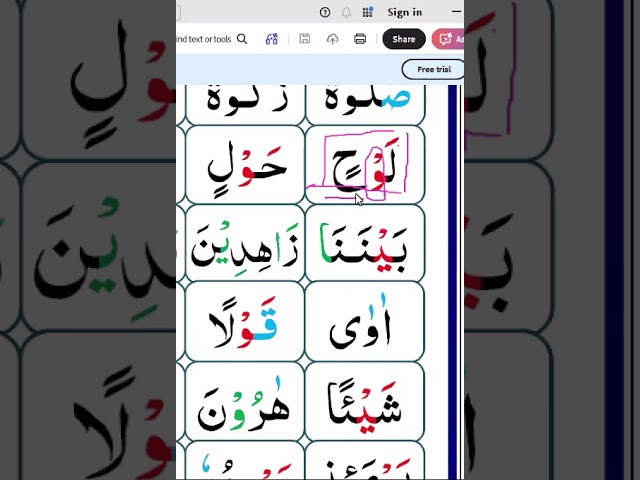
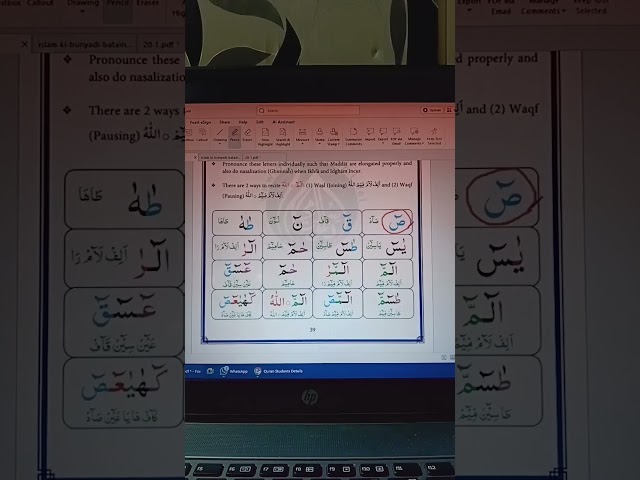
Noorani Qaida is where a beginner starts. Arabic letters, their sounds, and joining them, before any reading begins.
Quran reading with Tajweed covers makharij and the rules of recitation, so words come out as they should.
Hifz is memorization. Children usually begin with Juz 30 and build from there at their own speed.
Tarjuma is word by word Urdu translation, so you know what each line actually says.
Tafseer goes further into meaning, context and background. Popular with adults.
Urdu lessons for families who want their children reading and speaking it properly.
Certificates are issued once a course is finished and the Tajweed assessment is passed.
If you are weighing up a Quran teacher in Fiji against the madrasa down the road, book a free trial and compare the two properly before deciding.
Contact us on WhatsApp for trial classes in Fiji
F.A.Q. GUIDE RELATED TO OUR ONLINE COURSES & CLASSES
Very likely if you live in Suva, Nadi, Lautoka, Ba or Labasa. Outside those towns, far less so.
1 to 1 Classes duration is 30 minutes for each student. At some cases it can be increased up to 40 minutes.
Yes, you can choose at your own convenience. We do our best to find the teachers who is available at that time.
Any time you choose. Teachers work in shifts, so early morning, after school and evening slots are all open.
Hafs an Asim, the recitation used in Fiji. We do not teach Warsh.
In Labasa and Savusavu town, yes. Further out we run audio only.
That is fine. Lessons are taught in English unless you ask for Urdu.
Yes, for girls and adult women. Ask for one when you book.