
Quran Teacher Bolivia
Anyone looking for a Quran Teacher Bolivia can offer is usually learning alone, and often learning as an adult. Quran Pak Teacher teaches one to one over video from Lahore, and this page is written for the person who took shahada recently and cannot yet read a single letter.
Who is actually studying here
Bolivia has around 3,000 Muslims, roughly 0.02 percent of the population. The imam of the mosque in Sopocachi, La Paz has estimated about 2,000 practising Muslims in that city, and says around 95 percent of those who attend are Bolivian converts, most of whom came to Islam between the ages of twenty and forty. Friday congregation there is mostly young men and women.
That is unusual. In most countries we teach, the student is a child and the buyer is a parent. Here the student and the buyer are the same adult, learning from zero, often without a single relative who can help.
One Bolivian woman who converted, and who was called Marilin before she took the name Amina, described meeting people who had never heard of Muslims at all, and being mistaken for a member of the Hare Krishna community because of loose clothing. That is the starting point. Not a weak foundation, no foundation.
What already exists in Bolivia
The Centro Islámico Boliviano sits at Calle San Joaquín 2815 in Santa Cruz de la Sierra, opposite INFOCAL. It was founded in 1986 by Mahmud Amer Abusharar, a Palestinian who arrived in the country in 1974 and began by hosting Friday prayer at his home. It became the first Islamic organisation in Bolivia with legal status in 1989, began building the Al Omarein mosque in 1992 and opened it in 1994 as the country’s first mosque, joined the Islamic Organization for Latin America and the Caribbean as a founding member in 1997, and helped open Bolivia’s first Islamic cemetery in 2013. It has a presence in Santa Cruz, Cochabamba and Sucre.
In La Paz, the Yebel An Nur mosque opened in 2004 and the As-Salam mosque on Guachalla 725 opened in 2006, a three storey building with a prayer hall for men and women, a kitchen, a classroom and a residence for the imam.
If you can reach any of these, go. A teacher in the room is better than a teacher on a screen, and a community is better than either.
The honest problem with language
Our teachers work in English and Urdu. They do not teach in Spanish.
For most Bolivians that is a real limit and we will not pretend otherwise. If your English is limited, a Spanish speaking teacher will serve you better and you should look for one first. If you read and speak English with reasonable comfort, or your household already uses English or Urdu, we can teach you properly, and the Arabic letters themselves are taught by sound and repetition rather than by translation.
Tell us your English level honestly at booking. We would rather turn away a student than take money for classes that will not work.
Finding an online Quran teacher in Bolivia who fits a working week
Bolivia runs on UTC minus four all year. Lahore is UTC plus five, nine hours ahead.
The constraint here is work, not school. Employers in Bolivia do not build the day around prayer or study, so a convert learning Arabic is fitting lessons into gaps that nobody else is protecting. Early morning is the window that holds. A 6:00 am class in La Paz is 3:00 pm in Lahore, and 7:00 am is 4:00 pm, both ordinary afternoon hours for our teachers. Late evening from your side lands deep in the Lahore night, so we will tell you plainly at booking which of those slots we can commit to every week rather than promising anything.
Classes run Monday to Friday. We do not teach at weekends.
Connection and altitude
La Paz sits above 3,600 metres and El Alto higher still. Connection quality varies by neighbourhood and time of day more than most places. Audio only lessons work perfectly well for reading and correction, so if your bandwidth is thin, say so and the teacher will drop video rather than losing the class.
What we teach
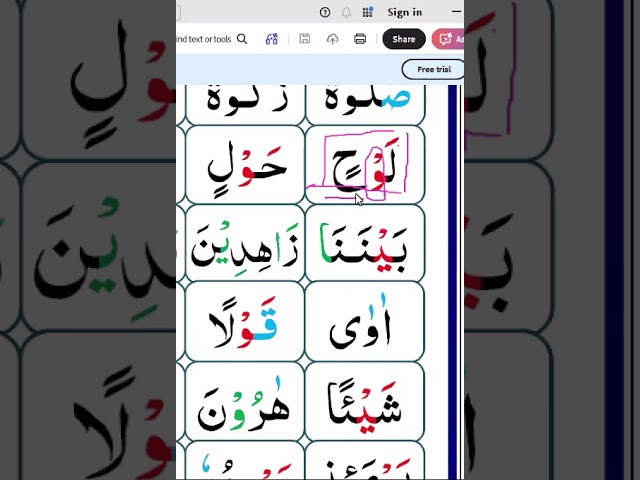
Noorani Qaida is where an adult beginner starts, and there is no shame in it. Letters, their joined shapes, then vowels. Nobody watches you get it wrong except the teacher.
Quran Reading builds recitation with correction on every sound, which matters more for a learner with no Arabic in the family to model it.
Hifz memorises in portions sized to you, with older portions revised each session.
Tarjuma gives word by word meaning, which converts usually want early rather than late.
Tafseer covers context and commentary, and answers the questions a Friday sermon has no time for.
Learn Urdu is separate and mainly of use to South Asian families living in Bolivia. Everything sits on our courses page.
Teachers, fees and the practical side
Hafiz Ali Ahmad and Hafiz Umair Akram lead our Quran instruction, each with ten years of teaching. We follow Hafs an Asim and the Hanafi madhhab. Women and sisters can request a female teacher and she is assigned before the trial class, not after.
Twenty classes a month of 30 minutes cost 30 USD, 30 GBP or 30 EUR, with the USD tier applying in Bolivia. Full detail is on the fee plan page. Payment is by Western Union, which is worth knowing before you commit. Three trial classes are free and no card is taken.
If a teacher becomes unavailable you hear it before the next class, with progress notes passed on. Miss a session and ask for a make up. Students have written about how this works on our testimonials page. Book through the contact page.
Book a trial
Send your city, your English level, whether you want a male or female teacher, and two early morning times. We confirm a teacher and a fixed weekday slot before the first lesson. The full FAQ covers the rest. Choosing a Quran Teacher Bolivia students stay with means finding one who tells you plainly what they cannot do before taking your money.
Contact us on WhatsApp for trial classes in Bolivia
F.A.Q. GUIDE RELATED TO OUR ONLINE COURSES & CLASSES
No. Classes are in English and Urdu. If your English is limited, a Spanish speaking teacher is the better choice and we will say so.
Yes. Santa Cruz has had a mosque since 1994 through the Centro Islámico Boliviano, and La Paz has two, opened in 2004 and 2006.
Noorani Qaida, one to one, privately.
Early morning is the reliable window. Bolivia is nine hours behind Lahore, so 6:00 am here is 3:00 pm there.
Yes, arranged before the trial class.
Hafs an Asim, Hanafi.
Six to twelve months of steady weekday classes for most adult beginners.
30 USD a month for 20 classes, after three free trial classes.
If You Have Any Questions, Trial Classes & Registration


FEEL FREE TO ASK
Where We Provide Online Quran Classes
“High in the Andes and across the salt flats of Uyuni, Bolivia’s Muslim families are keeping Quran learning close to home, through flexible one-to-one online classes built around their week.