
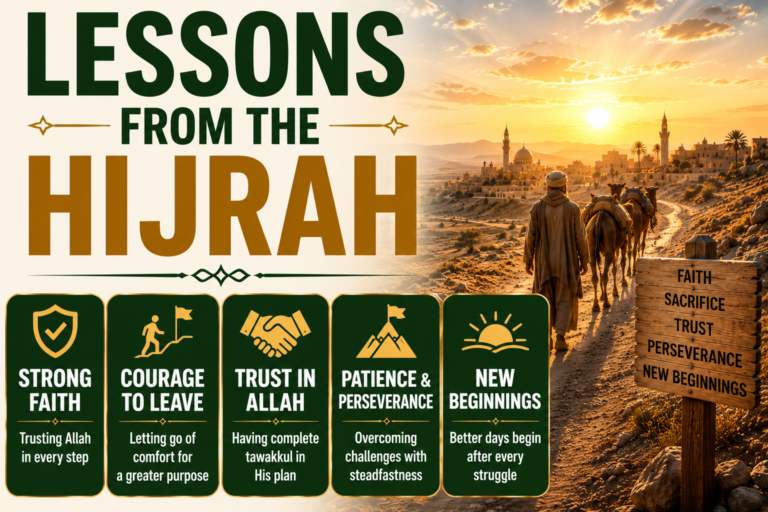
Important Lessons from the Hijrah: Timeless Guidance for Every Muslim
Introduction
The Hijrah was not simply a journey from one city to another. It was a turning point in Islamic history — a powerful reminder of sacrifice, trust in Allah, courage, and hope.
When Prophet Muhammad and his companions migrated from Makkah to Madinah, they faced fear, persecution, uncertainty, and hardship. Yet through every challenge, Allah opened doors that transformed a struggling Muslim community into a flourishing Ummah.
Today, Muslims around the world continue to draw strength from the lessons of the Hijrah. Whether you are facing personal struggles, spiritual setbacks, financial difficulties, or emotional pain, the story of the Hijrah teaches that every hardship can lead to a greater purpose.
In this article, we will explore the most important lessons from the Hijrah and how they apply to our daily lives.
What Is the Hijrah in Islam?
The Hijrah refers to the migration of the Prophet Muhammad ﷺ and the early Muslims from Makkah to Madinah in 622 CE.
This migration occurred after years of persecution by the Quraysh. Muslims were tortured, boycotted, threatened, and even killed because of their faith. Allah then granted permission for the believers to migrate to Madinah, where Islam could grow peacefully.
The Hijrah became so significant that it marks the beginning of the Islamic calendar.
Trust in Allah Is the Foundation of Success
One of the greatest lessons from the Hijrah is complete reliance upon Allah.
During the journey, the Prophet ﷺ and Abu Bakr hid inside the Cave of Thawr while enemies searched for them nearby. Fear surrounded them, but the Prophet ﷺ reassured Abu Bakr with words that continue to inspire Muslims today:
“Do not be sad. Indeed, Allah is with us.” (Quran 9:40)
This teaches us that true believers place their trust in Allah even when situations seem impossible.
Faith does not remove difficulties, but it gives us strength to overcome them.
Sacrifice Is Necessary for Growth
The companions left behind their homes, wealth, businesses, families, and comfort zones because pleasing Allah mattered more than worldly attachment.
The Hijrah teaches that every meaningful transformation requires sacrifice.
Sometimes we must leave behind toxic environments, bad habits, sinful relationships, laziness, and negative influences. Growth begins when we prioritize Allah over temporary comfort.
Patience Leads to Victory
The Muslims in Makkah suffered for many years before relief came.
The Hijrah reminds us that Allah’s timing is perfect. Victory may not come immediately, but patience always carries reward.
Many people give up right before success, healing, or blessings arrive. The Hijrah teaches us to remain patient and steadfast even during the darkest moments.
Planning and Preparation Matter in Islam
Although the Prophet ﷺ trusted Allah completely, he also planned carefully. Routes were selected strategically, trusted companions were assigned roles, supplies were prepared, and information was gathered secretly.
This proves an important Islamic principle: Tawakkul does not mean laziness.
Real trust in Allah includes effort, preparation, and responsibility.
Islam encourages believers to work hard, prepare wisely, and then place their trust in Allah.
Good Companionship Can Save Your Faith
The companionship between the Prophet ﷺ and Abu Bakr رضي الله عنه during the Hijrah is one of the greatest examples of loyalty and friendship.
A good companion strengthens your iman, supports you during hardship, reminds you of Allah, and encourages righteousness.
Choosing righteous friends can completely change a person’s future and spiritual journey.
Every Difficulty Has Hidden Wisdom
At first, the Hijrah seemed painful. Muslims lost their homes, families were separated, and the future seemed uncertain.
But Allah turned this migration into the beginning of Islamic civilization.
Sometimes the hardships we dislike are actually preparing us for something greater. A closed door may protect us, a delay may save us, and a hardship may strengthen our faith.
The Hijrah teaches believers to trust Allah’s wisdom even when they cannot fully understand it.
Building a Strong Community Is Essential
After arriving in Madinah, the Prophet ﷺ focused on brotherhood, unity, justice, mutual support, worship, and social harmony.
Islam is not just an individual religion. It values strong communities that care for one another.
Muslims should support each other, help the needy, strengthen local communities, spread kindness, and avoid division and hatred.
A united Ummah becomes stronger spiritually and socially.
True Change Starts with Faith
The Hijrah was more than physical movement. It was a spiritual transformation.
Every Muslim is called to make a personal Hijrah from sin to repentance, from heedlessness to remembrance, and from disobedience to submission.
The Prophet ﷺ said:
“The emigrant is the one who abandons what Allah has forbidden.”
This means the message of Hijrah remains relevant in every generation.
Why the Hijrah Still Matters Today
In a world filled with anxiety, distractions, and uncertainty, the Hijrah provides timeless guidance.
It reminds us that faith is stronger than fear, patience leads to success, sacrifice brings reward, and Allah never abandons believers.
No matter what challenges people face today, the lessons of the Hijrah inspire hope, resilience, and spiritual strength.
Final Thoughts
The story of the Hijrah is not only about history — it is about transformation, resilience, and unwavering faith.
Every Muslim experiences moments that require courage, patience, and trust in Allah. The Hijrah teaches us that even the hardest journeys can lead to incredible blessings.
By reflecting on these lessons and applying them in daily life, believers can strengthen their relationship with Allah and face life’s challenges with confidence and hope.
If you found this article beneficial, share it with others so more people can learn from the timeless lessons of the Hijrah. For more information click here.