
Introduction
Anger is a natural human emotion that everyone experiences at some point in life. Whether caused by family disagreements, workplace stress, financial pressure, or everyday frustrations, anger can quickly lead to harmful words and actions if left unchecked.
Islam recognizes that feeling angry is part of human nature — but it also provides clear, practical guidance on how to manage it. Through the Quran and Sunnah, Muslims are taught how to control their emotions, protect their relationships, and strengthen their character in a way that pleases Allah.
Understanding Islamic guidance on anger management is essential because uncontrolled anger damages relationships, harms mental wellbeing, and leads to actions a person deeply regrets.
What Does Islam Say About Anger?
Islam does not condemn the feeling of anger itself. It warns against allowing anger to control behavior.
The Prophet Muhammad ﷺ made this distinction clearly when he said:
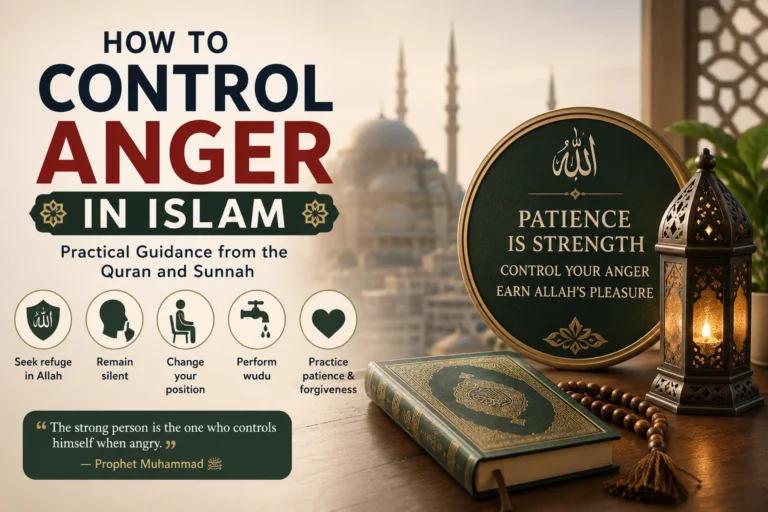
“The strong person is not the one who can wrestle others. Rather, the strong person is the one who controls himself when angry.”
This hadith teaches that true strength lies in patience, self-discipline, and emotional control — not in the ability to overpower others. A believer strives to respond with wisdom during moments of anger rather than reacting impulsively and causing harm.
Why Uncontrolled Anger Is Harmful
The consequences of uncontrolled anger affect both worldly life and spiritual standing. It damages family relationships, creates unnecessary conflicts, leads to hurtful speech and actions that cannot be taken back, causes lasting regret and guilt, weakens mental and emotional wellbeing, and distances a person from the qualities Allah loves.
Many broken relationships and deeply regretted decisions begin with a single moment of uncontrolled anger.
Common Causes of Anger
Recognizing what triggers anger is the first step toward managing it effectively. Common causes include stress and anxiety, family conflicts, financial difficulties, unrealistic expectations, hurtful words from others, pride, and a lack of patience in daily situations.
When believers identify their personal triggers, they can prepare a thoughtful response rather than reacting out of emotion.
Practical Islamic Ways to Control Anger
1. Seek Refuge in Allah
The first and most important step when anger arises is to seek protection from Allah by saying:
أَعُوذُ بِاللَّهِ مِنَ الشَّيْطَانِ الرَّجِيمِ A’udhu Billahi Minash Shaytanir Rajim (I seek refuge in Allah from the accursed Shaytan.)
Anger clouds judgment and encourages harmful reactions. Remembering Allah in that moment calms the heart, refocuses the mind, and weakens Shaytan’s influence over our emotions.
2. Remain Silent
When anger peaks, people often say things they later deeply regret. The Prophet ﷺ advised believers to remain silent during moments of intense anger. A deliberate pause before speaking prevents unnecessary conflict and protects relationships from damage that can be difficult to repair.
3. Change Your Physical Position
The Prophet ﷺ taught a practical and proven method: if you become angry while standing, sit down. If the anger continues, lie down.
This simple physical change reduces emotional intensity and creates space to regain composure before responding.
4. Perform Wudu
Islam recommends performing wudu when anger arises. Since anger is associated with heat and internal agitation, the cooling effect of water combined with the act of remembering Allah brings both physical calm and spiritual focus.
5. Leave the Situation Temporarily
Sometimes the wisest choice is to step away from a heated conversation entirely. Taking a short break allows emotions to settle naturally and prevents words or actions that may cause lasting harm to relationships and trust.
6. Remember the Rewards of Patience
Allah loves those who control their anger and forgive others. The Quran describes the believers:
“Those who spend in ease and in adversity, who restrain anger, and who pardon people — Allah loves the doers of good.” (Surah Aal-Imran, 3:134)
Reflecting on the rewards Allah has promised for patience and self-control is a powerful motivation to hold back during difficult moments.
7. Practice Forgiveness
Holding onto anger causes ongoing emotional stress, resentment, and spiritual heaviness. Islam consistently encourages forgiveness and mercy — not only for the benefit of others but for the peace and wellbeing of the believer themselves.
Letting go of grudges frees the heart and strengthens the relationships that matter most.
Applying Anger Control in Daily Situations
During family conflicts: Family disagreements are inevitable, but responding with patience and respect prevents arguments from escalating. Listening carefully before speaking and choosing calm words almost always leads to better outcomes for everyone involved.
At work or school: Stressful environments test patience regularly. Taking a deliberate breath, remaining composed, and focusing on solutions rather than reacting to emotions helps maintain a positive and productive atmosphere.
While driving: Traffic and delays are among the most common daily tests of patience. Keeping Allah in remembrance and consciously avoiding aggressive reactions protects both personal composure and the safety of others.
On social media: Online discussions can escalate quickly. Before responding to a comment or message, pausing to reflect on whether the response will be beneficial — or simply fuel conflict — is a simple but effective practice.
The Benefits of Controlling Anger in Islam
A believer who masters their anger gains far more than they give up in the moment. The benefits include stronger and more trusting relationships, clearer and better decision-making, greater emotional stability and inner peace, improved mental and physical wellbeing, and most importantly — the pleasure and reward of Allah.
A calm and patient person is consistently respected, trusted, and valued by those around them.
Building Good Character Through Anger Management
Controlling anger is a central part of developing the good character Islam calls every believer toward. The Prophet Muhammad ﷺ was known throughout his life for his extraordinary patience, mercy, and self-control — even when facing hostility, injustice, and personal hardship.
Muslims are encouraged to follow his example by treating others with consistent kindness and responding to difficulties with wisdom rather than reaction. Every time a believer successfully controls their anger, they strengthen their character, honor the Sunnah, and take a step closer to the person Allah wants them to be.
Conclusion
Anger is a natural emotion, but Islam equips believers with clear and practical tools to manage it wisely. Through seeking refuge in Allah, remaining silent, performing wudu, changing position, practicing forgiveness, and holding the rewards of patience in mind — Muslims can develop genuine emotional strength and lasting self-control.
True strength is not in reacting with anger. It is in mastering one’s emotions and responding with wisdom, mercy, and faith. Through the Islamic guidance of the Quran and Sunnah, every Muslim can learn to control anger and build a more peaceful, fulfilling, and spiritually grounded life.