
Overview of Dhuhr Prayer in Islam
The Dhuhr (Zuhr) prayer, also known as Namaz, is the second prayer performed after Fajr among the five daily prayers in Islam. It is a central act of worship that reconnects a Muslim with Allah during the busiest part of the day.
Meaning and Significance of Dhuhr Prayer
This midday prayer is a command from Allah and was strongly encouraged and emphasized in the teachings of the Prophet Muhammad (PBUH ﷺ). It carries deep spiritual significance, reminding believers to keep faith, devotion, and love for the Creator alive throughout daily life.
When Does Dhuhr Prayer Start?
The timing of Dhuhr prayer begins when the sun passes its zenith, the highest point in the sky, and continues until Asr. In places like the UK, the exact time varies due to sunrise, sunset, and calculation methods listed in a local Islamic calendar or timetable.
Why Dhuhr Is a Midday Spiritual Anchor
Dhuhr acts as a pause and refreshing break in the middle of a busy day, helping Muslims return their heart, mind, and focus to worship. It brings calm, peace, and renewed strength to manage daily work, duties, and challenges.
Total Rakats in Dhuhr Prayer
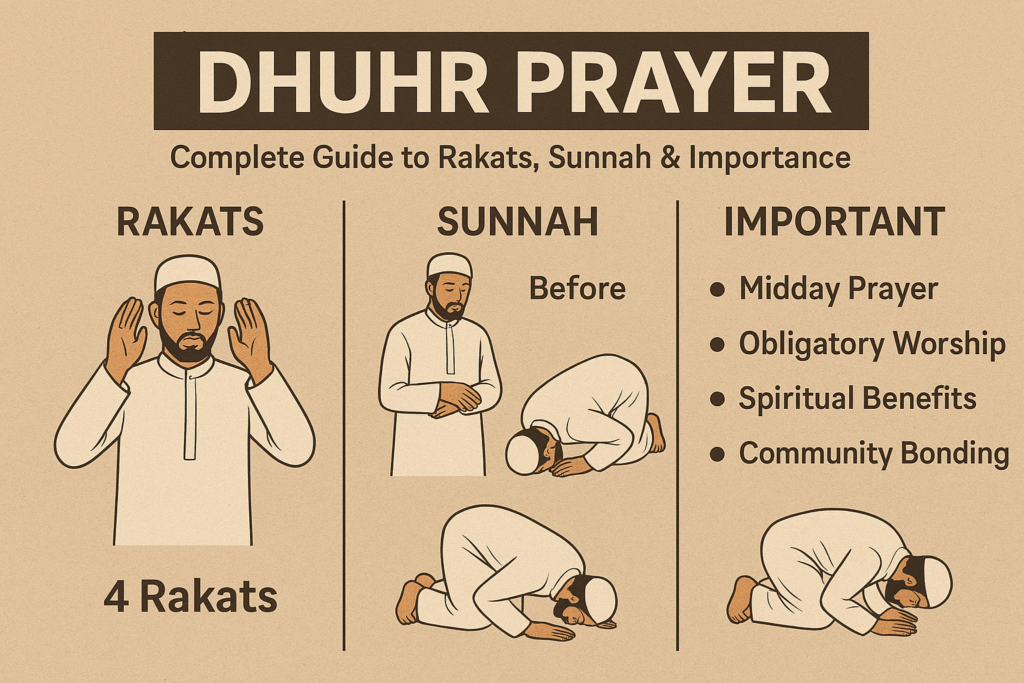
The structure of Dhuhr prayer includes 12 rakats total, divided into Sunnah, Fard, and Nafl. Each rakat has purpose, offering both obligation and opportunity for extra reward.
Sunnah Mu’akkadah Rakats Before Fard
The 4 Sunnah Mu’akkadah rakats prayed before the Fard are highly emphasized and were consistently observed by the Prophet Muhammad (PBUH ﷺ). These rakats prepare the heart and mind and help build discipline and sincerity.
Fard Rakats – The Core Obligation
The 4 Fard rakats form the obligatory core duty of Dhuhr. Missing them without a valid reason makes the prayer incomplete. They must be performed with proper niyyah (intention), Qiyam, Ruku, and Sujood, showing humility, dedication, and commitment.
Sunnah Mu’akkadah Rakats After Fard
After completing the Fard, 2 Sunnah Mu’akkadah rakats are recommended. These bring additional blessings, help fill shortcomings, and reflect love and closeness to Allah beyond basic duty.
Nafl Rakats for Extra Reward
The final 2 Nafl rakats are optional voluntary units. While not required, they allow Muslims to earn extra rewards, strengthen their spiritual record, and deepen their connection with the Creator.
How to Perform Dhuhr Prayer Correctly
Proper wudu (ablution), correct pronunciation of Qur’anic verses, calm recitation, and facing the Qibla in Mecca are essential. Performing each step with mindfulness improves quality, acceptance, and clarity in Salah.
Spiritual Benefits of Dhuhr Prayer
Regular Dhuhr prayer brings barakah, divine blessings, forgiveness of sins, purification, focus, productivity, energy, and peace. It protects from negligence, laziness, stress, and wrongful actions.
Importance of Consistency and Discipline
Praying Dhuhr daily builds routine, punctuality, self-control, and accountability. It strengthens habits that positively shape both spiritual life and worldly responsibilities.
Common Mistakes to Avoid in Dhuhr Prayer
Mistakes like rushing, being distracted, skipping Sunnah, or incorrect Qur’anic pronunciation reduce the reward and impact of the prayer. Performing Salah calmly and humbly preserves its beauty and value.
Qaza and Making Up Missed Dhuhr Prayer
If Dhuhr prayer is missed due to sleep, oversleep, or forgetfulness, it should be prayed as qaza as soon as remembered. Delaying unnecessarily increases the risk of negligence, though combining with Asr is only allowed in rare necessity.
Dhuhr Prayer and the Day of Judgment
According to Hadith references such as Sahih and Tirmidhi, Salah will be the first deed taken into account on the Day of Judgment. Performing Dhuhr correctly contributes to a sound record and earns mercy and protection.
Learning and Improving Your Dhuhr Prayer
To strengthen understanding and practice, structured learning helps. Many students begin through Our Courses, supported by flexible options like a Monthly fee and a Free trail, making consistent learning accessible and uplifting.