Quran Teacher Liberia
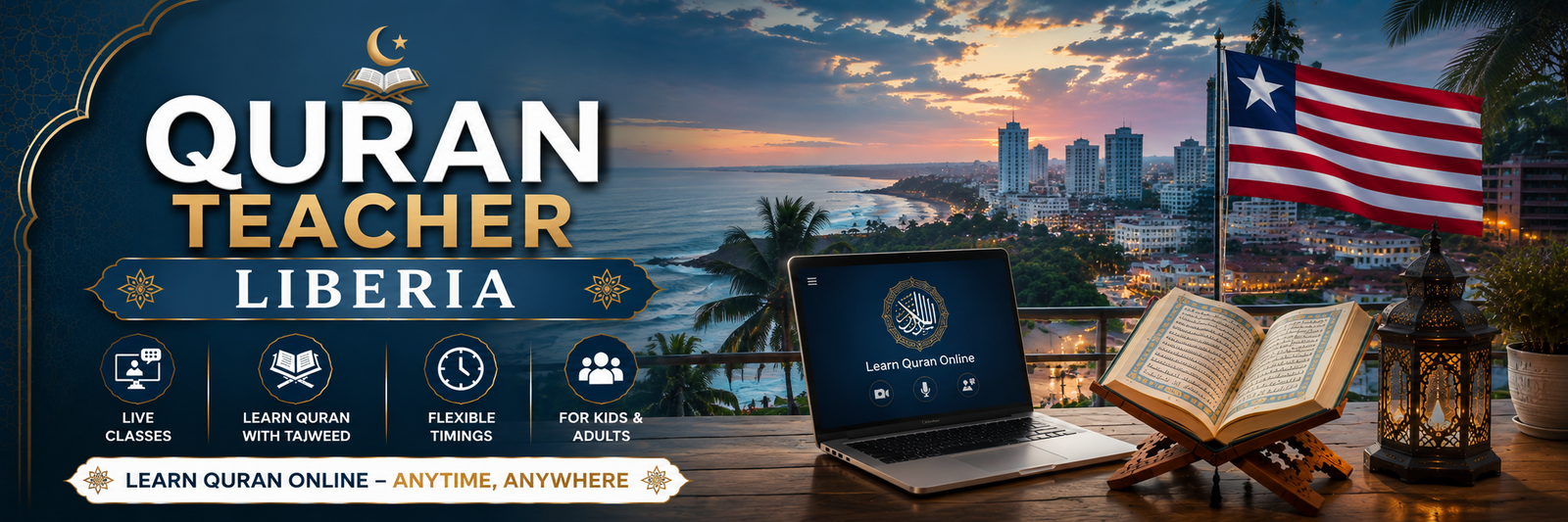
A Quran teacher in Liberia is now within reach of any family with a phone. We teach students through live one to one classes in English, over WhatsApp video or Zoom. Families in Monrovia, Paynesville, Gbarnga, Kakata, Voinjama and Robertsport learn with us from home. Liberia stays on GMT all year, so we book your slot in Liberian time and keep it fixed. Your first class is free and no bank card is needed.
Class times that fit a Monrovia week
Most families take three classes a week, thirty minutes each. The busiest slots run from 5:00pm to 8:00pm Liberian time, after school and before Isha.
Our teachers work five hours ahead of you. We run a late shift so your evening slot belongs to one teacher every week, not a different person each session.
If your child attends a school under the Monrovia Consolidated School System, we plan around exam weeks. MCSS adjusted its exam scheduling so Muslim students could observe Islamic holidays, and we follow the same calendar.
Paying without a bank account
You can pay with Orange Money or MTN MoMo. Dial *144# for Orange or *156# for Lonestar Cell MTN. Both wallets hold Liberian dollars and United States dollars.
These services reach most of the country. Orange Money passed one million subscribers in March 2025 and MTN Mobile Money reported 1.28 million, together serving more than 2.2 million people in a nation of about 5.6 million. Mobile money is now licensed separately from the phone networks under rules set by the Liberia Telecommunications Authority.
Family abroad can pay for you. Many of our students here are funded by relatives in Minneapolis, Philadelphia, Staten Island and Providence. We accept payment from any country and keep the account in the parent’s name in Liberia. If you are the relative sending funds, our classes for families in the United States run on the same system.
Which recitation do you teach?
Most families never think to ask this, and most academies never raise it.
Liberian Muslims are mostly Maliki Sunni. Across West Africa, older Quranic schools often teach the Warsh reading from Nafi’. Most online academies teach only Hafs from Asim and never mention that a second reading exists.
This matters at home. A child who learned Warsh at the mosque on Benson Street may hear something different online and think one of them is wrong. Neither is.
We teach Hafs from Asim, the reading printed in most Qurans worldwide. If your child already reads Warsh, tell us in the free class. We explain the differences plainly to you and your child, so nobody feels corrected for something that was never a mistake.
Five questions to ask before you pay anyone
Use these with us or with any academy you are considering.
- Will my child have the same teacher every week, or whoever is free?
- Can I sit in on a class without asking first?
- What happens to my money if we stop after two weeks?
- Which recitation do you teach?
- What do you do when my child stops making progress?
An academy that cannot answer all five in writing is not ready to teach your child. Our answers are in the sections above and below.
How we keep your child safe
Every teacher gives us verified identity documents and their certification before a first class.
- Parents may sit in on any class, at any time, without giving notice.
- Classes are recorded and kept for 90 days. You may request any recording of your own child.
- A male teacher is never assigned to a female student under 18 unless a parent asks for this in writing.
- If a teacher is not right for your child, tell us and we reassign within 48 hours at no cost.
- Concerns go to our student support team on WhatsApp at +92 313 858 1672. We reply within 24 hours.
Can we request a female teacher?
Yes. Female teachers are available for girls and for women learning on their own. Tell us when you book and we will match your daughter, or you, with a female teacher for every class. The course and the fee stay the same. If you would like to speak with her before the first class, we can arrange a short call.
When the current goes off
Load shedding and weak signal are part of normal life here. We plan around both.
- A thirty minute video class uses roughly 150 MB. Voice only uses about 15 MB.
- If video will not hold, we switch to voice on WhatsApp and carry on.
- A phone is enough. No laptop is needed.
- If the call drops and cannot be restored within ten minutes, the class is credited, not lost.
- Tell us your usual LEC outage window and we will book around it.
What a class looks like
Minutes 1 to 5, salaam and review of the last class. Minutes 6 to 20, new letters or verses with correction after every line. Minutes 21 to 27, the student reads back alone. Minutes 28 to 30, homework is set and a short note goes to the parent on WhatsApp.
Most children aged six to ten finish Noorani Qaida in five to seven months at three classes a week. About one in five takes longer than a year. When that happens we slow the pace and tell you, instead of moving the child forward.
Expect the first two weeks to be slow. Children who have never used a video call spend the first session getting comfortable rather than reading. This is normal and we do not count it against progress.
Courses open to Liberian students
All six of our courses are open to students in Liberia, at the same times and the same fee.
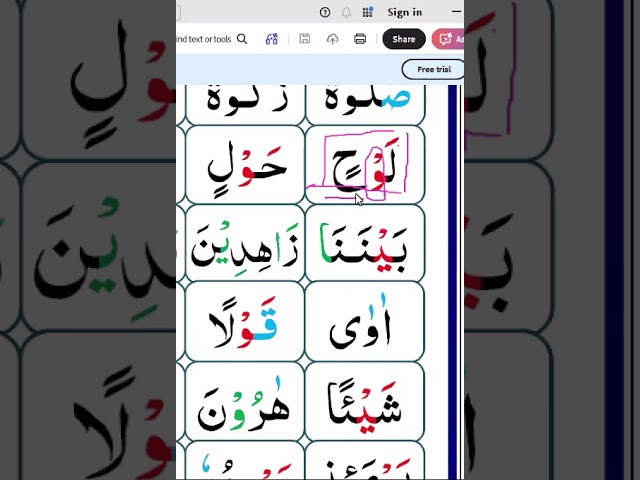
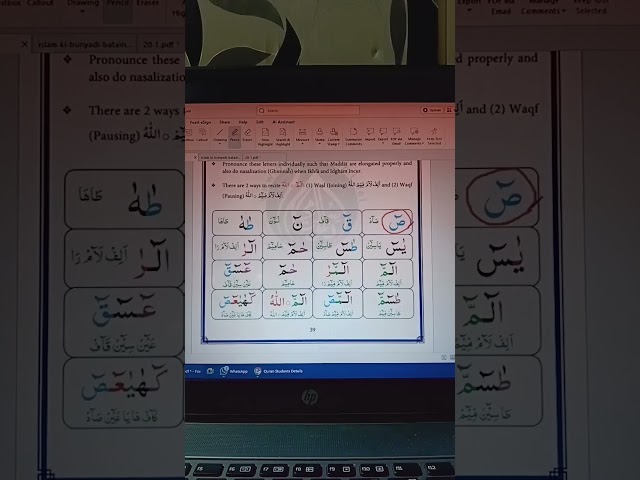
Noorani Qaida teaches the Arabic letters and their correct sounds. Every beginner starts here, child or adult.
Quran reading with Tajweed follows Qaida, for students who can form the letters but need the rules of recitation.
Quran memorisation covers short Surahs, Juz 30 or full Hifz, built around daily revision rather than speed.
Quran translation gives the meaning of each verse, for students who can already read fluently.
Quran Tafseer explains the context and lessons behind the verses. Suited to adults and older teenagers.
Urdu classes are available for families who want their children to keep the language.
Not sure where to start? Your free class includes a short reading check, and we tell you honestly which course fits.
Fees, pausing and refunds
Classes cost 30 United States dollars a month for 20 classes, five days a week, thirty minutes each. Full pricing sits on our fee plan page.
A second child in the same home pays 20 percent less. You may pause for travel, illness or Ramadan with three days notice and pay nothing for that period. Eid holidays are not charged. Our refund policy explains cancellation terms in full.
Booking a Quran teacher in Liberia takes one message. Send a WhatsApp to +92 313 858 1672 and we will reply within 24 hours to arrange your free class.
Contact us on WhatsApp for trial classes in Liberia
F.A.Q. GUIDE RELATED TO OUR ONLINE COURSES & CLASSES
Yes, across Montserrado, Lofa, Bong, Nimba, Margibi and Grand Cape Mount. Classes run in English, any slot from 6:00am to 10:00pm Liberian time.
We teach Hafs from Asim. If your child learned Warsh at the mosque, tell us at the free class and we will match the teacher to it.
Orange Money on *144# or MTN MoMo on *156#. Bank transfer and payment from family abroad also work.
We switch to voice on WhatsApp, which uses a quarter of the data. If the call cannot be restored within ten minutes, the class is credited.
Yes. Request one when you book and she takes every class, at the same fee.
Thirty US dollars for 20 classes of 30 minutes. A second child in the same home pays 20 percent less.
Most beginners aged six to ten finish Noorani Qaida in five to seven months at three classes a week. About one in five takes longer.
Thirty minutes with a teacher and a short reading check. No card, no obligation.
If You Have Any Questions, Trial Classes & Registration


FEEL FREE TO ASK
Where We Provide Online Quran Classes
Along the Atlantic coast of West Africa, Liberia’s Muslim families are keeping Quran learning close to home, through flexible one-to-one online classes built around their week.