
Quran Teacher Mexico

Quran Teacher in Mexico: Online Classes in Your Own Time Zone
We offer online Quran classes to students across Mexico.
Lessons are one to one over Zoom or Google Meet. You get 20 lessons a month, Monday to Friday, 30 minutes each, for $30.
Lessons are booked around your local Mexican time. Male and female teachers are available. You get three free trial classes before you decide anything.
We have taught online since 2020.
Class Times That Work in Mexico
Our teachers are in Lahore, Pakistan. Mexico City runs 11 hours behind us.
That sounds like a problem. It is not, and here is why.
Two windows work well
Morning in Mexico: A 7:00 am class in Mexico City is 6:00 pm for your teacher. A 10:00 am class is 9:00 pm here.
Those are evening hours in Pakistan, so teachers are free.
Evening in Mexico: A 7:00 pm class in Mexico City is 6:00 am the next morning here.
Our teachers are awake after Fajr, so early slots suit them.
The one gap
Mid afternoon does not work. A 3:00 pm class in Mexico City falls at 2:00 am for us.
If you live in Baja California
Most of Mexico stopped changing its clocks in October 2022.
Mexico City, Guadalajara, Monterrey and Puebla now stay on UTC minus 6 all year, so your class time stays the same through the year.
Baja California is the exception. Tijuana and Mexicali still follow the United States schedule and move their clocks twice a year. If you live there, tell us and we will check your slot in March and November so the time still suits you.
Other time zones
Cancún and the rest of Quintana Roo sit one hour ahead of Mexico City. Hermosillo and most of Sonora sit one hour behind.
Tell us your city and we will work out the timing with you.
Starting From Zero as a New Muslim
Many Muslims in Mexico came to Islam as adults.
Mexico’s 2020 national census counted 7,982 Muslims. The Pew Research Center puts the figure much higher, around 111,000 in 2010 and a projected 126,000 by 2030.
The gap between those two numbers says something useful. Many people who pray and fast are not counted, and many are the only Muslim in their family.
If that is you, this part is written for you.
You do not need any Arabic to begin
You do not need to have grown up with the language. You do not need to know a single letter.
Your first lesson is a conversation. Your teacher finds out what you can already do, what you want to reach, and how much time you have each week.
There is no test. You will not be asked to read out loud before you are ready.
Being a beginner as an adult is normal
Adults often say they feel behind. It is one of the most common things we hear.
Someone who takes shahada at 34 has not missed anything. The letters come first, then joining them, then short words. That order works at any age.
Lessons are private. Only you and your teacher are in the room. You can read what our students have said about starting as adults.
Sounds That Are Hard for Spanish Speakers
Spanish helps you in some places and works against you in others. Knowing which is which saves time.
What helps you already
The Spanish r in perro and carro is close to the Arabic ra (ر). Many English speakers struggle with this sound for weeks. You already make it every day.
The j in Guadalajara and Juárez is close to the Arabic kha (خ). So is the x in México.
What you will need to build
Arabic uses sounds that Spanish does not.
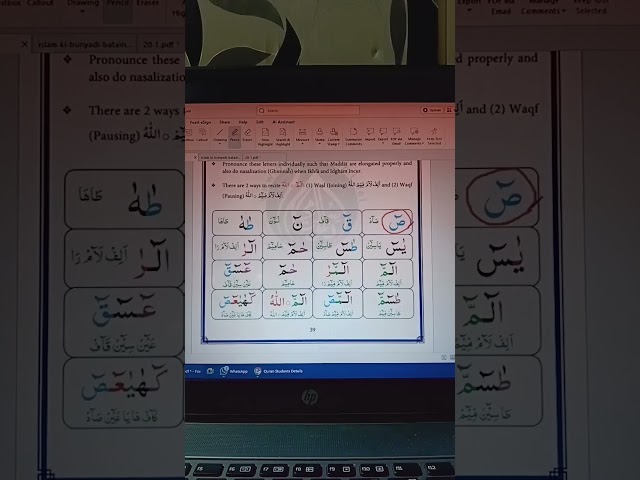
Ayn (ع) and ha (ح): Both come from deep in the throat. Spanish has nothing in this position, so these two usually take the most practice.
Qaf (ق): Spanish speakers say it as a normal k, as in casa. The real sound is made further back in the mouth.
Sad (ص), ta (ط), dad (ض) and dha (ظ): These are heavier versions of sounds you know. Say sol, then say it again with the back of your tongue raised. That is the direction.
Tha (ث): In Spain, the c in gracias is close to this sound. In Mexico it is said gra-si-as, so the sound is new to most Mexican students. This one is easy to miss because nobody warns you about it.
Vowel length
Spanish has five vowels and they stay the same length.
Arabic stretches some vowels and not others. This is called madd, and getting it wrong changes the meaning of the word.
It is easier to learn madd correctly at the start than to correct it later.
Where Classes Are Available
Lessons are online, so any city in Mexico works. Where you live only affects your class time.
Muslim communities around the country
Mexico has small but settled Muslim communities.
The Centro Cultural Islámico de México has served the capital since 1995. The Suraya Mosque in Torreón, built in 1989, is generally counted as the country’s first.
Monterrey has the Centro Cultural Islámico del Norte in the city centre. Guadalajara has the Asociación de Musulmanes de México. Puebla has its own Islamic centre.
In Chiapas, around 400 Tzotzil Maya people have become Muslim since the 1990s. The Mezquita Imam Malik in San Cristóbal de las Casas serves that community.
If there is nothing near you
Some students live nowhere near a mosque or a class. Some are the only Muslim household in their colonia.
Online lessons exist for exactly that reason.
Reading the Quran: Where You Start
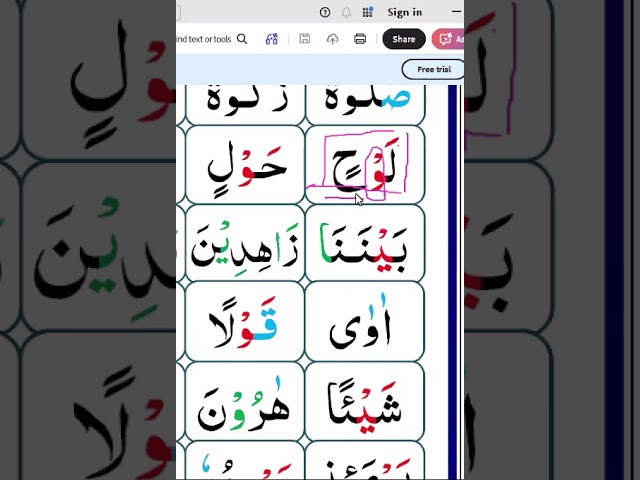
Beginners start with Noorani Qaida. Some people write it as Qaida Noorania. It is the same book.
The Qaida teaches the Arabic letters, then how letters join, then the vowel marks, then simple words.
Skipping it causes problems later. Students who go straight to the mushaf often build reading habits that take longer to correct than they would have taken to learn properly.
After the Qaida you move to reading from the Quran itself. Most students begin at Juz 30, where the surahs are short.
Tajweed and Correct Recitation
Tajweed is the set of rules for pronouncing the Quran properly. Our full Quran reading course covers it step by step.
What it covers
The main area is makharij, which means where each letter is made in the mouth and throat.
The rules that follow from it include ghunnah, qalqalah, idghaam, madd and the stopping signs.
How lessons work
Tajweed is taught out loud, not from a book alone.
Your teacher listens, stops you at the error, says the correct sound, and has you repeat it before moving on. A written explanation cannot fix a sound. Only a listening teacher can.
Recitation practice
This covers fluency, breathing, where to pause and where not to, and reading at a steady pace without losing accuracy.
Memorising the Quran
Hifz is a long commitment. We would rather be honest with you about that than promise a quick result. Our Quran memorization course is built around a steady daily target rather than a rush.
A realistic pace
Most students begin with Juz 30 or a set of short surahs.
Revision is the part people underestimate. New pages do not hold unless older ones are repeated regularly. A student who memorises daily but revises rarely will lose most of it.
Who it suits
Hifz suits students who can practise on the days when there is no lesson.
If that is not realistic at the moment, reading and tajweed are a better place to put your time.
Understanding the Meaning
Some students want to move past reading and into meaning.
We teach Tarjuma, which is translation, and Tafseer, which is explanation of the verses. You can see all six programmes on our courses page.
These lessons suit new Muslims who can read the words but do not yet know what they mean. They also help parents who want to answer their children’s questions properly.
Fees and Your Free Class
The fee is $30 a month for 20 lessons.
That is Monday to Friday, 30 minutes a day, one to one with your own teacher. Full details are on our monthly fee page, and we publish a refund policy so you know where you stand before paying.
You get three free trial classes, and no payment is needed to book them.
We accept payment by Western Union. If that is difficult from your city, tell us and we will look at the options with you.
How to Begin
Message us on WhatsApp at +92 313 858 1672, or use the contact form.
Tell us three things: your city, whether the lessons are for you or your child, and whether you would prefer a male or female teacher.
We will suggest a time in your local hours. You take the three trial classes and decide afterwards.
Contact us on WhatsApp for trial classes in Mexico
F.A.Q. GUIDE RELATED TO OUR ONLINE COURSES & CLASSES
Our teachers speak English, Urdu and Arabic. Tell us how comfortable you are in English and we will match you with the teacher who can explain most clearly.
One-to-one classes are 30 minutes per student. In some cases, this can be increased up to 40 minutes.
Morning slots between 6:00 am and noon, and evening slots between 6:00 pm and 10:00 pm, work best. Mid afternoon is not available.
A makeup class can be rescheduled on request.
You can learn the Quran online from qualified teachers in Mexico through one-to-one classes. Students can choose convenient class timings and learn from home.
Absolutely. Adults can join online Quran lessons regardless of their previous Quran-learning experience.
Yes. Quran classes are available for complete beginners as well as students who already know how to read the Quran. Lessons can be adjusted according to the student’s level.
Yes. The courses follow a detailed plan suitable for all ages, from a 4-year-old child to an elderly adult, regardless of prior experience or qualifications whether you’re in or anywhere else.
If You Have Any Questions, Trial Classes & Registration


FEEL FREE TO ASK
Where We Provide Online Quran Classes
From Mexico City to Guadalajara, and every city in between, students across Mexico are learning Quran online from the comfort of their own home, through personalised one-to-one classes that are thoughtfully built around their individual schedule and pace.