
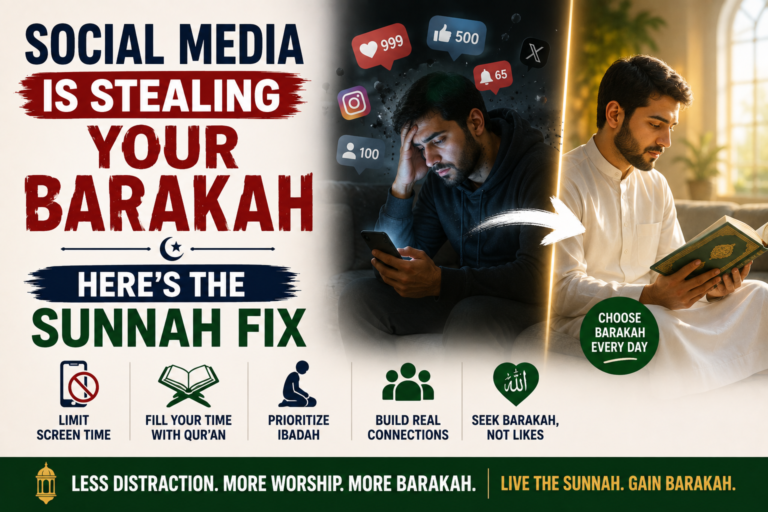
Social Media Is Stealing Your Barakah – Here’s the Sunnah Fix
Have you ever finished a long scroll session on Instagram or TikTok and felt… empty? Your time vanished, your prayers felt rushed, and the day slipped away without much productivity or peace. Many Muslims today notice this subtle drain. What you’re experiencing is the quiet theft of barakah — that divine blessing from Allah that makes little feel abundant and efforts fruitful.
Barakah isn’t just more money or hours; it’s divine quality in your time, relationships, and deeds. The Prophet ﷺ taught us to value time as a blessing. Yet modern social media, designed for endless engagement, often pulls us away from what truly brings barakah. As someone who’s personally wrestled with this — late-night scrolls delaying Fajr prep, or comparing feeds eroding gratitude — I’ve seen how reclaiming control through Sunnah transforms days from scattered to blessed.
Let’s explore why this happens and, more importantly, the prophetic fixes that restore barakah.
What Is Barakah and Why Does It Matter in the Digital Age?
Barakah refers to Allah’s blessing that amplifies goodness, growth, and satisfaction in what might otherwise seem ordinary. The Quran links it to gratitude and obedience: “If you are grateful, I will surely increase you [in favor]” (Surah Ibrahim 14:7).
In practice, barakah shows up as:
- A short productive morning feeling more fulfilling than a distracted full day.
- Family time with presence and warmth instead of divided attention.
- Deeds that multiply in reward, like consistent small acts of worship.
Social media disrupts this. Its algorithms exploit dopamine loops, keeping us hooked with notifications, likes, and infinite scrolls. Research and real experiences show it fragments attention, fuels comparison (which breeds envy, a barrier to barakah), and wastes the two blessings the Prophet ﷺ warned us about: health and free time.
One common story: A young professional starts the day checking feeds “just for 10 minutes.” Hours later, prayers are delayed, work feels heavier, and the heart feels restless. This isn’t coincidence — it’s the loss of muraqabah (mindful awareness of Allah) that Sunnah cultivates.
How Social Media Steals Your Barakah: The Hidden Costs
Social media isn’t inherently evil; the Prophet ﷺ encouraged spreading good, and platforms can aid dawah or connection. But unchecked use often leads to:
- Time theft without fruit: Endless scrolling replaces Quran, dhikr, or family. The Prophet ﷺ said, “There are two blessings which many people lose: health and free time for doing good.” (Bukhari)
- Distraction from ibadah: Notifications pull focus during salah or Quran. One scholar noted how constant checking weakens concentration in worship.
- Spiritual erosion: Comparison kills contentment (qana’ah), a key to barakah. FOMO (fear of missing out) replaces gratitude. Mental health dips — anxiety, isolation — making even halal tasks feel burdensome.
- Reduced productivity and presence: Studies (and personal trials) show frequent checking cuts efficiency. Real-life bonds weaken when phones dominate meals or conversations.
I’ve observed this in my own circle and online Muslim communities: detox stories where people report sudden “extra” time, deeper salah, and unexpected ease after cutting mindless use. One sister shared how unfollowing non-beneficial accounts and replacing them with Quran recitations brought peace and barakah she hadn’t felt in years.
The Sunnah fix isn’t total rejection but intentional, moderated use aligned with prophetic guidance.
The Sunnah Fix: Practical Steps to Reclaim Barakah
The Prophet ﷺ modeled excellent time management, dividing his day purposefully around salah, family, rest, and dawah. He advised utilizing five things before five others, including free time before preoccupation. Here’s how to apply Sunnah principles against social media drain:
1. Renew Your Intention (Niyyah) and Seek Barakah in the Morning
Start with sincere intention: Use social media only for good — seeking knowledge, sharing beneficial content, or maintaining halal ties — not validation or escape.
Actionable Sunnah tip: Make dua for barakah in the early hours, as the Prophet ﷺ did: “O Allah, bless my ummah in its early rising.” Rise after Fajr for Quran or reflection instead of scrolling. Many report this single habit multiplies daily productivity.
2. Practice Moderation and Self-Control (Wasatiyyah and Muraqabah)
Islam loves balance. The Prophet ﷺ said Allah loves consistent small deeds over burnout.
- Set strict time limits (e.g., 30 minutes total daily for non-essential use).
- Turn off non-essential notifications, especially before salah or family time.
- Ask before opening an app: “Is this bringing me closer to Allah or distracting me?”
3. Curate Your Feed and Replace with Beneficial Content
Unfollow accounts that trigger envy or waste time. Follow scholars, Quran channels, and productive Muslim pages. Use apps mindfully for knowledge, not entertainment.
Practical step: Do a weekly “feed audit.” Replace one scrolling habit with listening to a short hadith or dhikr. Over time, the algorithm shifts toward what uplifts your iman.
4. Embrace Digital Detox Periods and Real Presence
The Prophet ﷺ valued community and mindful eating together for barakah. Apply this offline:
- Designate phone-free zones (meals, after Maghrib, family time).
- Try short detoxes: One day a week or a full weekend with minimal use. Replace with salah, Quran, exercise, or helping others.
- Lower your gaze online and speak (or post) only good, as per prophetic etiquette.
5. Prioritize What Truly Matters – The Prophetic Schedule
Structure your day around the five prayers. Allocate specific slots for social media, treating it like a tool, not a default habit. Focus on high-impact acts: helping family, seeking knowledge from scholars (not just feeds), and consistent worship.
Step-by-step weekly reset:
- Review your usage (screen time report).
- Delete or hide tempting apps.
- Set intentions for the week.
- Track one barakah “win” daily (e.g., peaceful salah or productive hour).
- Make istighfar for past waste and move forward with gratitude.
These aren’t rigid rules but flexible habits rooted in Sunnah. Start small — consistency brings the real blessing.
Real Results: Stories of Reclaimed Barakah
Countless Muslims report transformation after applying these fixes. A student who limited scrolling to post-Asr found his studies easier and salah more focused. A parent who instituted phone-free dinners noticed warmer family bonds and unexpected ease in daily tasks.
In my experience guiding friends and reflecting on my own journey, the common thread is this: When you protect your time and heart for Allah, He places barakah where you least expect — more peace, clearer focus, and satisfaction with less.
Conclusion: Choose Barakah Over Distraction
Social media can be a tool for good, but without boundaries, it steals the very barakah that makes life meaningful. The Sunnah fix is simple yet powerful: intentionality, moderation, morning barakah, and replacing harm with benefit.
Start today. Pick one tip — perhaps a morning routine or notification cleanse — and observe the shift. Allah rewards those who strive for His pleasure. May He restore barakah to our time, deeds, and hearts, and make us among those who use every blessing wisely. Ameen.
What small change will you make first?