
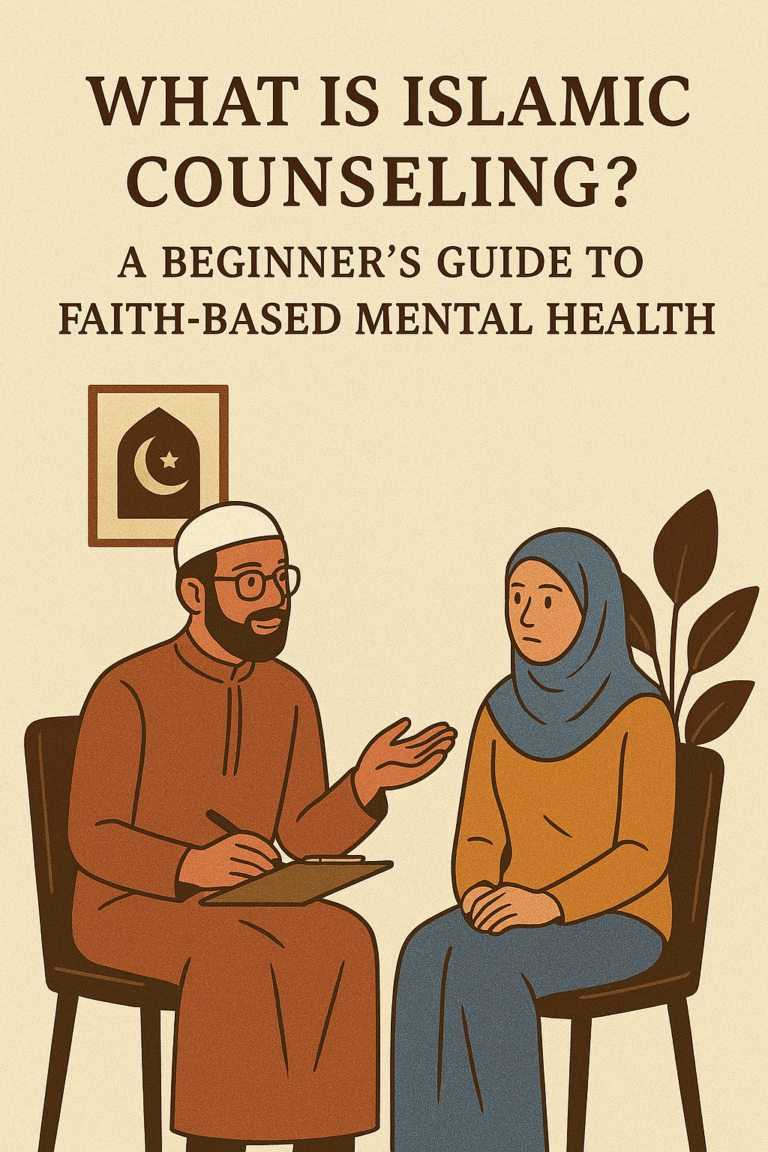
Why Islamic Counseling Matters Today
Islamic counseling responds to the growing need for faith-based mental health care by offering an approach that respects Islamic identity while addressing mental and emotional struggles. It recognizes that healing is not only psychological but also spiritual, rooted in a meaningful connection with God and guided by Quran and Sunnah.
The Spiritual–Psychological Balance
This form of counseling integrates modern psychological techniques with Islamic principles, creating a holistic model of well-being. Attention is given to the heart (Qalb) as the central place of perception, clarity, and intention, linking mental health with inner cleanliness and purpose.
Core Beliefs That Shape the Counseling Process
Islamic counseling is faith-centered and grounded in Tawheed, the oneness of Allah as the ultimate source of comfort and healing. Teachings of Prophet Muhammad emphasize compassion, empathy, and kindness, helping individuals navigate life’s difficulties with patience (sabr) and trust (tawakkul).
Key Spiritual Tools Used in Healing
Counselors often encourage dua, prayer (Salah), reflection, and meditation on the names of Allah as practical tools for emotional regulation and resilience. Practices such as shukr (gratitude) and Tafakkur (self-reflection) help uncover fitra, the innate purity within each person.
How Islamic Counseling Is Practiced
Through thoughtful integration, therapists combine therapeutic methods like CBT with Islamic understanding. This creates culturally relevant, spiritually sensitive care that respects religious identity, traditions, and values, while strengthening the client–creator relationship as a core element of healing.
Differences from Conventional Therapy
Unlike purely secular therapy, Islamic counseling does not separate emotional healing from faith. Alongside evidence-based practices such as cognitive restructuring and behavioral interventions, it incorporates acts of worship, charity (Zakat), and fasting when appropriate, offering a broader path to recovery.
Benefits for Beginners
For newcomers, Islamic counseling provides a familiar worldview, a safe and non-judgmental environment, and clear coping strategies for anxiety, stress, and emotional challenges. It promotes balanced growth of mind, body, and soul, supporting long-term peace, stability, and fulfillment.
Learning, Guidance, and Ongoing Support
Many people begin their journey through structured learning such as Our Courses, designed to offer accessible guidance with a flexible Monthly fee and a supportive Free trail, helping individuals build understanding, confidence, and emotional strength within an Islamic framework.