
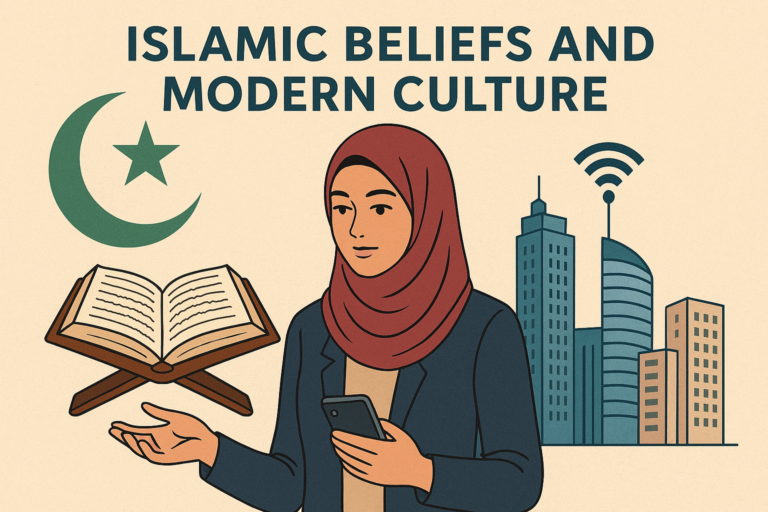
Core Islamic Beliefs That Shape Muslim Life
At the heart of Islam is Tawhid (Oneness of God), which is central to all aspects of life and forms a comprehensive Islamic worldview based on unity, justice, and balance. Belief in the Akhirah (Hereafter) creates accountability, motivates moral behavior, and reminds Muslims that this world is a place for sowing seeds for the next life. The Quran and Sunnah serve as the primary sources guiding Islamic ethics, Islamic law, and daily Muslim life, emphasizing moderation and realism rather than extremes.
Family and Community in Islamic Culture
A defining feature of Islamic beliefs and culture is the strong emphasis on family and community. Parents, children, and grandparents live with mutual support, where roles are complementary and equal before Allah. In modern society, these values offer emotional stability, social responsibility, and a sense of belonging that is often missing in individualistic cultures.
Islamic Culture in the Modern World
In the modern world, Muslims engage with contemporary life through Islamic Modernism, a movement that seeks to adapt Islamic thought to modernity by reinterpreting scripture in harmony with democracy, human rights, science, and technology. As discussed on platforms like Al-Islam.org and defencejournal.com, Islam encourages rationality, reason, experience, and the pursuit of knowledge, which historically led to scientific and technological advancement in Muslim civilizations.
Adaptation, Identity, and Modern Challenges
Today, Muslim cultures navigate adaptation versus purity, engaging in dialogue and selectively borrowing from other cultures while protecting core Islamic identity. Materialism, secularism, and Western cultural influences present ongoing challenges. Across the globe—from Indonesia to the West—Muslim communities work to reconcile faith and modernity, forming unique identities that balance global Islamic heritage with local cultural contexts in the 21st century.
Cultural Expressions of Islam
Islamic cultural expressions are visible in mosques, Islamic architecture, calligraphy, and geometric patterns, all reflecting deep spiritual themes. Everyday practices include Halal food, modest dress, hijab for women, and appropriate attire for men. Major Islamic festivals such as Eid al-Fitr and Eid al-Adha remain central to the Muslim calendar and strengthen communal bonds.
Learning Islam in a Modern Context
Understanding Islamic beliefs and modern culture requires continuous learning. From experience, structured education helps Muslims remain grounded while engaging confidently with modern society. Through Our Courses, offered with an affordable Monthly fee and a Free trail, learners can explore authentic Islamic teachings while addressing real-world challenges with clarity and confidence.