
What Is Dua e Qunoot?
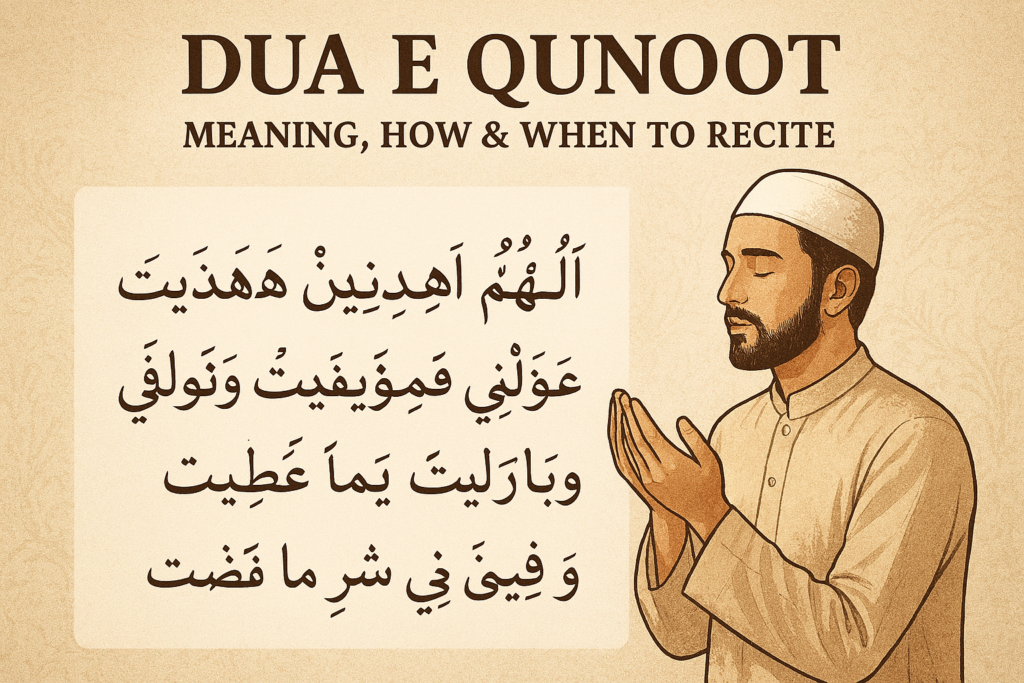
Dua e Qunoot is a powerful Islamic supplication that reflects obedience, humility, and devotion to Allah. The word Qunoot (قنوت) comes from Qanata, meaning submission and complete dependence on Him. Muslims recite this dua to seek help, guidance, forgiveness, and protection during times of difficulty, distress, or spiritual need. From years of personal practice, I have found that Dua e Qunoot turns prayer into a deeply heartfelt conversation, where one openly acknowledges weaknesses and fully surrenders to Allah’s will, mercy, and decree.
This supplication holds strong religious significance because it reminds believers that real strength comes from reliance on the Creator, not personal control. The phrases within Dua e Qunoot teach patience, faith, and trust—qualities essential for spiritual growth and inner peace.
When to Recite Dua e Qunoot
Dua e Qunoot is most commonly recited during the Witr prayer after Isha, specifically in the last rakat of the night prayer. In the Hanafi school, it is recited in Witr, while the Shafi’i school may recite a form of Qunoot in Fajr. Authentic hadith narrations show that the Prophet Muhammad (PBUH) recited Qunoot at different times, especially during hardship, confirming that it can be recited anytime when help is needed.
Many scholars agree that Qunoot is a Sunnah practice and mustahabb (recommended), not mandatory. Whether prayed alone or behind an Imam, it remains a powerful means of seeking Allah’s support.
How to Recite Dua e Qunoot (Hanafi Method)
In the Hanafi example, Dua e Qunoot is recited after Ruku’ in the final rakat of Witr:
Rise from bowing (Ruku’)
Say Takbir (Allahu Akbar)
Raise your hands
Recite the Dua e Qunoot text, silently or aloud
Continue and finish the prayer as usual
This method creates a natural pause where the heart and mind fully focus on supplication, making the prayer more meaningful and sincere.
Meaning of Key Phrases in Dua e Qunoot
Some of the most powerful meanings include:
“O Allah, guide me among those You have guided”
“Grant me well-being and protect me”
“Save me from the evil You have decreed”
“None can decree over You”
“Blessed and Exalted are You, our Lord”
These phrases reinforce humility, trust, and complete submission to Allah’s wisdom.
Why Dua e Qunoot Is Important
Regular recitation of Dua e Qunoot helps Muslims:
Strengthen their spiritual connection
Build patience and reliance
Find peace during distress
Stay aligned with faith and righteousness
Over time, this dua becomes a source of light, hope, and emotional strength, especially during challenging moments in life.
Learn Dua e Qunoot With Proper Guidance
To deepen your understanding and improve recitation, structured learning makes a real difference. Through Our Courses, students learn authentic supplications step by step with expert guidance, a clear Monthly fee, and a Free trail to get started confidently.