
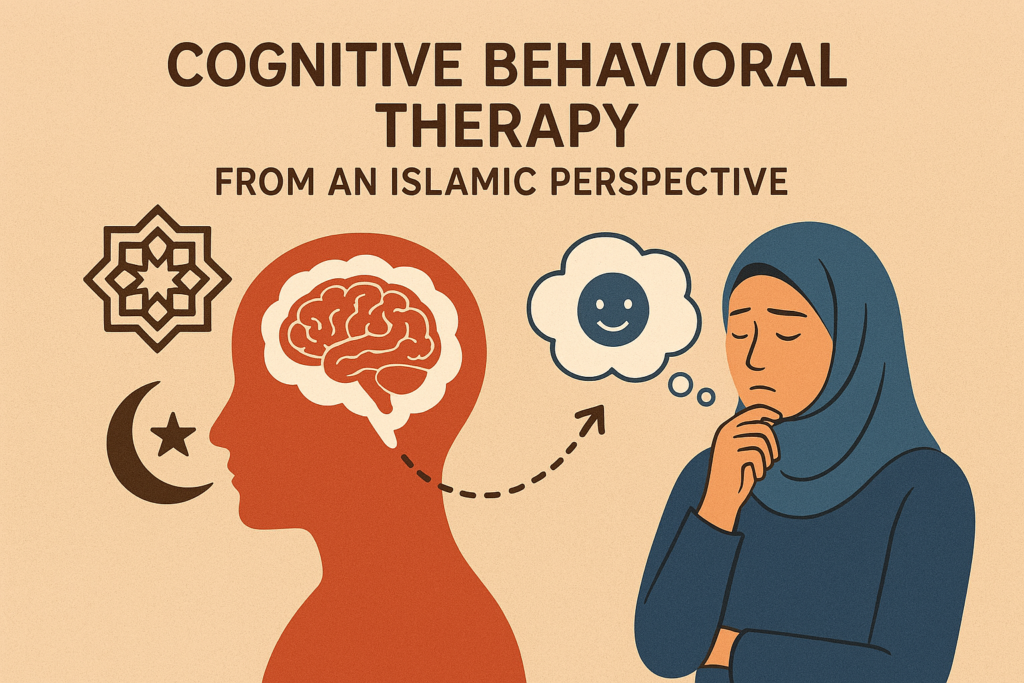
Understanding CBT Through an Islamic Lens
Cognitive Behavioral Therapy (CBT) is widely used in modern mental health care, but when approached from an Islamic perspective, it becomes more than a psychological method. It integrates secular techniques with core teachings from the Quran and Sunnah, creating a faith-based, culturally congruent approach that resonates deeply with Muslim clients. In practice, I’ve seen how this alignment helps individuals feel understood rather than conflicted between therapy and belief.
Islamic Integrated Cognitive Behavioral Therapy (IICBT)
This integration is often referred to as Integrated IICBT, a model that respects both evidence-based psychology and Islamic spirituality. Instead of removing faith from therapy, IICBT redefines negative thoughts using Quranic verses and Hadith, helping clients reframe automatic negative thoughts (NATs) into faith-aligned perspectives rooted in meaning, hope, and accountability.
Cognitive Restructuring with Quran and Sunnah
Traditional CBT challenges distorted thinking; Islamic CBT deepens this by grounding restructuring in divine principles. Concepts such as Tawakkul (trust in Allah), Sabr (patience), and Husn al-Dhann (good opinion of Allah) replace helplessness with reliance on Allah’s plan. This reframing allows suffering to be understood as a test, a means of growth, and a path toward resilience rather than a personal failure.
The Islamic Understanding of the Self (Nafs and Mind)
Islamic psychology views the human being holistically, addressing the soul (nafs) and mind together. Struggles related to nafs al-ammarah and nafs al-lawwamah are recognized as part of human development, not moral defeat. This understanding helps normalize inner conflict while guiding individuals toward balance, self-awareness, and ethical growth.
Behavioral Activation Through Islamic Practices
Behavioral activation in IICBT is strengthened through Islamic practices such as Dhikr (remembrance of Allah), prayer, gratitude, forgiveness, and community involvement through the mosque. These actions are not just coping tools; they are spiritually meaningful behaviors that reinforce positive change, emotional regulation, and social connection.
Spiritual Foundations: Self-Reflection and Accountability
Islam strongly emphasizes self-reflection and self-awareness, as highlighted in Surah Al-Imran (3:191) and Surah Al-Hashr (59:18–19). These verses align naturally with CBT’s focus on examining thought patterns, intentions, and behaviors. Through accountability and conscious reflection, individuals learn responsibility without shame and growth without self-condemnation.
Practical Therapeutic Application
In real sessions, a therapist may guide a client to replace the thought “I’m a failure” with a restructured belief such as “Allah tests those He loves; this difficulty is a chance for Sabr and drawing closer to Him.” This practical application combines cognitive restructuring, faith-based coping, and emotional healing in a way that feels authentic rather than imposed.
Psychological and Spiritual Benefits of IICBT
The benefits of IICBT include cultural congruence, deeper healing, improved psychological well-being, and stronger spiritual growth. Research sources such as ResearchGate and proceedings-szmc.org.pk highlight outcomes like faster recovery, better compliance, and reduced relapse in conditions such as depression and anxiety.
Ethical Practice and Therapist Competence
Delivering Islamic CBT requires therapists to build rapport, trust, and cultural sensitivity while navigating dual roles responsibly. Ethical considerations include tailoring therapy to individual needs, respecting belief systems, and maintaining professional boundaries—all of which strengthen therapeutic outcomes.
Learning and Access Through Structured Programs
For those seeking structured learning, Our Courses provide access to this integrated model with a flexible Monthly fee and a Free trail. These programs support professionals, students, and clients alike in gaining knowledge, confidence, and practical skills that nurture the mind, body, and soul through an Islamic CBT framework.