
What Is the Asr Prayer?
The Asr prayer is the afternoon Islamic prayer and the fourth prayer among the five daily prayers, performed daily by every Muslim. It holds a special place in Islam because it comes during the busiest part of the day, helping believers return to Allah, revive the soul, and strengthen self-control. From personal teaching experience at Islamic Quran Academy, I’ve seen how Asr creates balance between routine duties and spiritual needs, keeping faith alive in the heart even when life feels overwhelming.
Timing of Asr Prayer
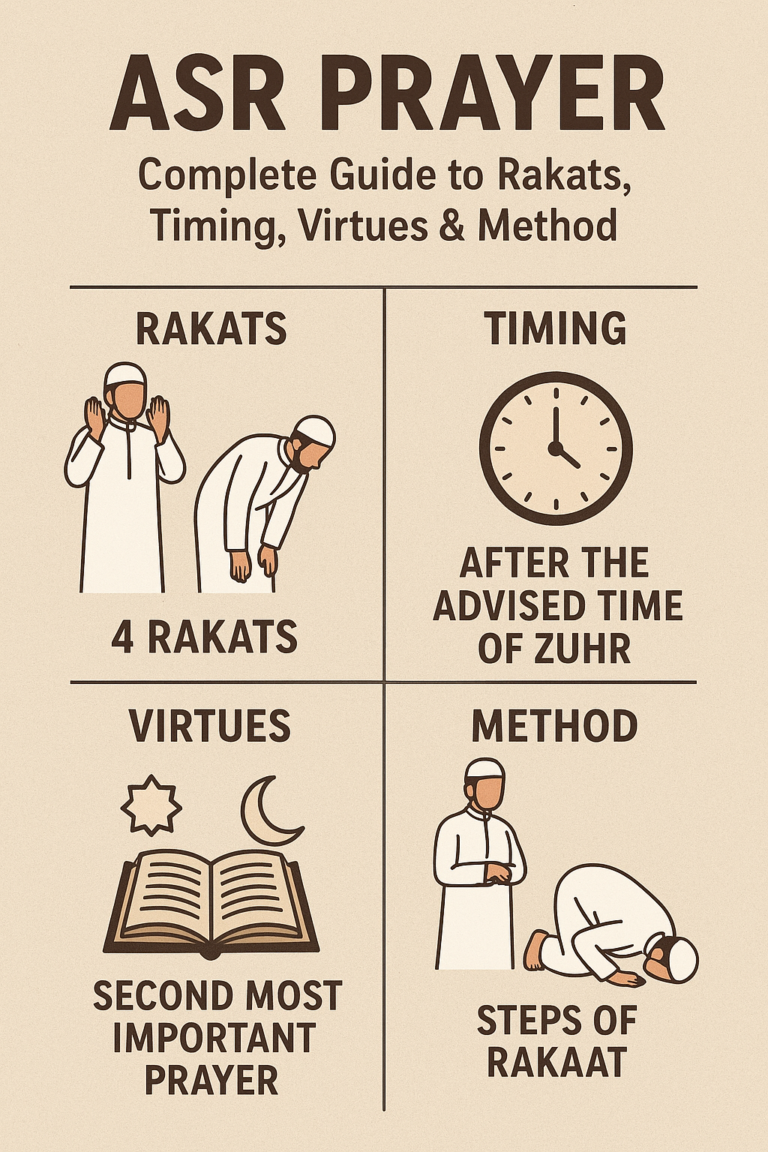
The timing of Asr begins at the end of Dhuhr, the noon prayer, when the sun passes its highest point and an object’s shadow becomes equal to its height or longer than the object, depending on Islamic traditions. The Hanafi tradition considers it when the shadow is twice its length, while others say equal length. The time lasts just before sunset, and delaying prayer without reason is discouraged. Praying early is more rewarding and shows eagerness to follow Allah’s command.
Asr Prayer Rakats Explained
The Asr prayer has a clear rakat breakdown with a specific pattern. There are 4 obligatory (Fard) rakats that are mandatory and essential for the prayer to count, and 4 Sunnah rakats that are optional and recommended, usually prayed beforehand as two sets of 2. This brings the total to up to 8 rakats, offering extra reward, additional blessings, and spiritual rewards.
Importance and Virtues of Asr Prayer
Guarding Asr prayer is highly emphasized by the Prophet (PBUH), who stressed its importance for discipline, devotion, and a strong spiritual connection with Allah. Quran verses and Hadith highlight that Allah praises those who protect daily prayers as a sign of true faith, while skipping prayer can reduce blessings. Consistently praying Asr acts as a shield against laziness and heedlessness, especially in a busy life.
Step-by-Step Method of Performing Asr Prayer (Fard)
The step-by-step method starts with Niyyah, a sincere intention in the heart, followed by Takbiratul Ihram, raising hands to the ears and saying Allahu Akbar. In Qiyam (standing), recite Surah Al-Fatihah and another short Surah in the first two rakats. Perform Ruku (bowing) with hands on knees, saying Subhana Rabbiyal Adheem three times, then rise into I’tidal, saying Sami Allahu liman hamidah. Go into Sujud (prostration) twice, with forehead, nose, hands, knees, and toes touching the ground, reciting Subhana Rabbiyal A’la. Sit briefly in Jalsa, saying Rabbighfirli, then repeat through the second rakat. In the third and fourth rakats, recite Al-Fatihah only, then complete Tashahhud, final Tashahhud, and end with Tasleem, turning head right and left, saying Assalamu Alaikum wa Rahmatullah.
Common Mistakes and How to Avoid Them
Many people rush through prayer, skip Sunnah rakats, or struggle with lack of concentration, which can reduce benefit. Not understanding words or praying without calm can weaken connection. Slowing down, choosing a quiet place, reflecting on Allah’s greatness, and learning meanings of Surah Al-Fatihah and short surahs makes the prayer more complete and more rewarding.
Making Up Missed Asr Prayer (Qaza)
If unavoidable reasons cause someone to miss the afternoon prayer, Islam teaches the rules of qaza. The prayer should be performed as qaza with four Fard rakats. Scholars advise it is usually not combined with Maghrib or Isha, and although praying at the last moment is still valid, praying earlier brings a greater reward and helps maintain consistency.
Learning and Growing Through Asr Prayer
Regular Asr prayer strengthens discipline, renews the heart, and deepens connection with Allah. Many learners improve their consistency through Our Courses, flexible Monthly fee plans, and starting with a Free trail, making it easier to build sincerity, dedication, and a strong daily worship routine.