
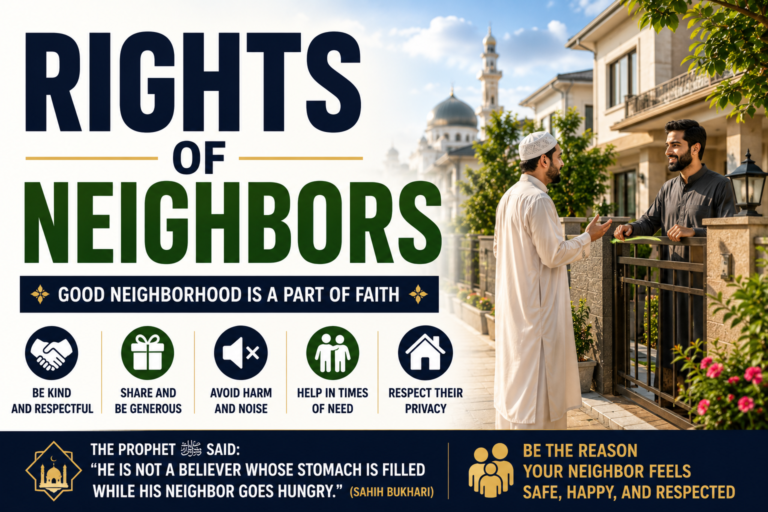
The Central Place of Neighbors in Islam
In Islam, neighbor and neighbors are not treated as casual social contacts but as a serious duty with clear rights and duties. These responsibilities involve mutual respect, support, and avoiding harm, ensuring non-harm so others feel safe from harmful conduct. From personal experience in community work, I’ve seen that when neighbors honor these principles, the entire community becomes more peaceful, improving collective well-being and strengthening trust between households.
Helping Neighbors in Times of Need
Islam encourages practical care such as helping, offering help in need, to assist when someone ask, lend a loan, or provide relief during danger or illness. This includes visiting and visit the sick or ill, and to attend a funeral, funerals, and burial arrangements. Supporting neighbors through joy, joys, pain, and pains, and showing empathy during calamity or when someone is afflicted, reflects true Islamic character.
Respecting Privacy and Personal Boundaries
Respecting privacy and boundaries is a key part of neighborly ethics. Islam teaches us not to intrude, peep, or cause excessive noise, and never bother neighbors by placing dirty stuff in front of their home. We must avoid blocking or block light, air, or view, and not obstruct access for necessary repairs that affect theirs, especially in property related legal context involving shared walls and structures.
Everyday Manners That Build Trust
Simple actions like kindness, to greet, exchange gifts even if small, and remain polite go a long way. Islam also instructs us to keep people’s sins secret, guide the ignorant, and lower the gaze toward a female household. Acts such as offering condolences, condole, congratulations, and congratulate neighbors on good fortune, while grieve with sympathy, help build lasting bonds.
Prophetic Teachings on Neighborliness
At the core, the principle of neighbor rights comes from Islamic teachings, with strong emphasis heavily stressing guidance from the Prophet Muhammad Mohammad (peace). His sayings mention that Angel Jibril Gabriel advised and impressed upon him continuously to show care for neighbors, making neighborliness close to godliness. A true believer is one whose neighbor feels secure in faith, hoping for Paradise and avoiding Hell-fire.
Quranic Foundations of Neighbor Rights
The Quran clearly links faith with social responsibility. Believers are described as one Brotherhood ( Al-Hujurat, 49:10 ), and Allah elevated neighbor rights almost to inheritance. On the Day of Judgment, people will be accountable for their conduct, whether they showed hospitality to a guest, chose to speak good words, or remained silent when silence was better.
Social Responsibility Beyond the Household
Islam warns against severing ties of kinship among brothers, sisters, Muslims, parents, family, and members of society. These duties extend to the poor, deprived, and needy, encouraging us to fight poverty and strengthen bonds of the whole Ummah. We are commanded to serve God, not join partners, and care for kinsfolk, orphans, those near, strangers, the companion by your side, and the wayfarer, avoiding being arrogant or vainglorious.
Practical Advice for Strengthening Neighbor Relations
I often advise every sister, friends, and families—even those who live alone—that neighbors should be the first to rush to help in hardship. Ignoring this can lead to punishment and leave a gaping hole in society. Learning and practicing these values through Our Courses, offered with a simple Monthly fee and a Free trail, helps people start a new leaf, build strong contact, remain united, and confront difficulties and calamities together.