
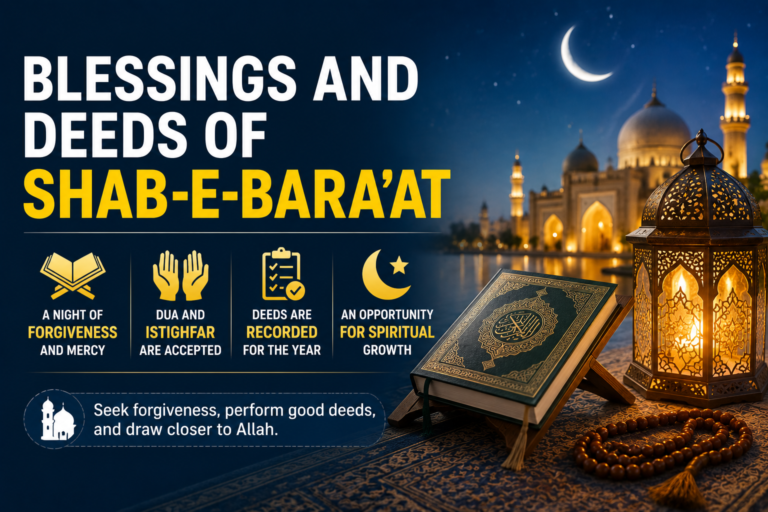
The Night of Divine Planning
Shab-e-Bara’at is deeply connected with Decision, Life, Death, and Rizq. What has happened from the start and will happen till the end is already written in Lauh Mahfooz, the protected tablet, yet every year on this night angels note down commandments for the coming year—who will be born, who will leave the world, and how much Rizq will be given.
Presentation of Deeds to Allah Almighty
This night carries the weight of accountability, as the deeds of people are presented to the Lord Almighty. This is clearly mentioned in a Hadith narrated on the authority of Hadhrat Ummul Momineen Aisha Siddiqa رَضِیَ اللہُ تَعَالٰی عَنْہَا, reported by Imam Baihaqi, where the Holy Prophet صَلَّی عَلَیْہِ وَاٰلِہٖ وَسَلَّمَ explained the excellence and greatness of this night.
A Night Where Prayer Is Not Rejected
One of the strongest blessings of this night is that Prayer is not rejected. Abdullah bin Umar عَنْہُمَا mentioned 5 blessed nights in Shu’abul Iman, including Friday, the first night of Rajab, 15th Sha’ban, Eid Ul Fitr, and Eid Ul Azha, reminding believers to turn sincerely to Allah.
Worship That Revives the Heart
Staying awake in prayer on this night brings Assurance of the Heart. As Abu Kurdus عَنْہُ narrates in Kanz Ul Ummal, the heart remains spiritually alive while others grow heedless. From experience, this quiet worship builds focus, humility, and sincerity.
Visiting Graves and Remembering the Hereafter
Visiting graves is Mustahab, with no restriction of time or place, but Shab-e-Bara’at holds special value. The Beloved Rasool went to Baqe’e, showing that remembering death softens the heart and strengthens accountability.
Staying Away from Unislamic Practices
Alongside worship, believers are instructed to Stay Away from Unislamic things. Islam is a way of life that assures peace and security. Hurting others through speech or actions, wasting money, or engaging in harmful traditions like fireworks contradicts the spirit of this night and blocks mercy.
Repentance, Reconciliation, and Clean Hearts
The powerful Letter of Imam Ahmad Rida Khan of Bareilly emphasizes repentance, reconciliation, and cleansing the book of deeds. Mutual tension, violated rights, and lack of forgiveness prevent salvation, while unity and sincerity open the doors of mercy.
Living the Message Today
Teaching and learning these values through Our Courses has shown me how understanding this night changes behavior beyond rituals. With a simple Monthly fee or even a Free trail, many reconnect with Shab-e-Bara’at as a night of reform, mercy, and meaningful return to Allah—not just a date on the calendar.